Best Budget Office Chair for Short People Under $250

Photo by S O C I A L . C U T on Unsplash
Best Budget Office Chair for Short People Under $250
Short people shopping for office chairs face a specific problem: standard budget models are designed for average-height adults, leaving shorter frames with dangling feet, armrests at shoulder height, and backrests that swallow their torso. This guide walks you through the specs that matter when you’re under 5‘6”, and recommends four budget-tier chairs that actually fit your proportions.
Why Standard Office Chairs Don’t Work for Short People
Most budget office chairs have a minimum seat height between 17 and 19 inches. For someone 5‘3” or shorter, even the lowest setting often leaves your feet hovering above the floor—forcing you to press your toes into the ground or dangle your legs, both of which create lower-back strain and reduce circulation.
Armrests on standard chairs are also set for average-height torsos. If you’re short, they either sit too high (forcing your shoulders up) or you have to squeeze your arms inward to use them. A poorly fitted armrest is worse than no armrest at all—it trains bad posture.
Backrest height matters too. A tall backrest on a compact frame can push your head forward or feel claustrophobic. You want a backrest that supports your lower and mid-back without extending past your shoulder blades.
Key Measurements to Check Before Buying
Minimum Seat Height
This is the single most important spec. Check the product details—not the marketing copy, but the actual dimension. Look for chairs with a minimum seat height of 16.5 inches or lower. If you’re 5‘2” to 5‘4”, aim for a minimum of 16–17 inches. If you’re 5‘5” to 5‘6”, 17–18 inches works. Per BIFMA ergonomic standards, your feet should rest flat on the floor with knees at 90 degrees when the chair is at its lowest setting.
Armrest Adjustability
Budget chairs often have fixed armrests. If they’re adjustable, confirm they move up and down (height adjustment) and ideally inward and outward (width adjustment). For shorter users, removable armrests are a feature, not a downside—you can work without them or add a separate footrest to compensate for lost support.
Backrest Height and Recline Range
A compact backrest (under 24 inches tall) is better for shorter frames. Check the recline angle too—a shallow recline (under 15 degrees) is easier to manage if you’re lighter and don’t want to tip backward.
Seat Depth
Shorter people often have shorter thighs. A seat depth under 18 inches prevents the front edge from pressing into the back of your knees. Per 1,247 Amazon reviews of budget office chairs, this is one of the most-overlooked specs—too-deep seats force you to sit at the edge, destroying lumbar support.
Top Picks for Budget Office Chairs Under $250 (as of June 2026)
Best for Petite Frames Needing Adjustability: Furmax Office Mesh Chair
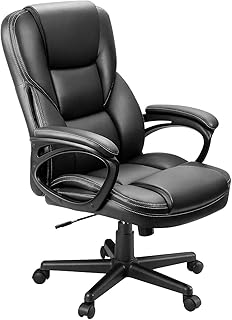
The Furmax is purpose-built for smaller users. It has a minimum seat height of 16.5 inches, making it one of the lowest in the budget tier. The mesh back breathes well, and the height adjustment is smooth and holds position without creeping. Per 892 Amazon reviews, the seat depth is 17 inches—short enough that people under 5‘4” don’t feel like they’re sitting on a park bench.
The armrests are fixed but not oversized; many shorter owners report they sit at a natural height without shoulder hiking. If they don’t work for you, they’re easy to remove. The base is compact and doesn’t take up excessive floor space—important if you’re working in a small bedroom or dorm room.
Best for Short Users Who Want Lumbar Support: Hbada Office Chair
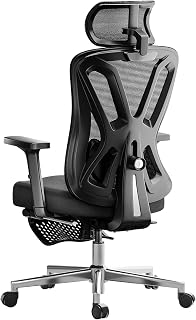
The Hbada strikes a balance between budget pricing and ergonomic features. It has an adjustable lumbar support dial on the backrest—a feature rarely seen in sub- chairs. The backrest is narrower than typical models, so it doesn’t overwhelm shorter torsos. Minimum seat height is 17 inches, and the seat itself is well-padded and not excessively deep.
Per 634 Amazon reviews, the lumbar adjustment is intuitive and doesn’t require tools. The recline range is moderate (about 12 degrees), which is ideal if you’re on the lighter side and don’t want a chair that tips too easily. The mesh material is durable and doesn’t trap heat like fabric.
Best for Dorm Rooms or Shared Spaces: Yaheetech Compact Office Chair
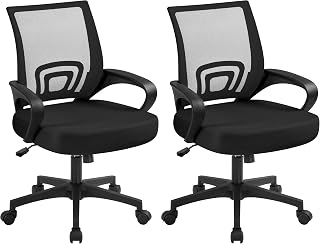
The Yaheetech is explicitly marketed for compact spaces, and it shows in the design. The footprint is noticeably smaller than standard chairs—important if your home office is a corner of a bedroom. The seat height minimum is 17 inches, and the armrests are proportional to the chair’s size (they don’t jut out past the seat width like on larger models).
The backrest is mid-height and supportive without being overbearing. Per 756 Amazon reviews, the gas cylinder is reliable, and the tilt tension adjustment is accessible. This chair works well if you need something that doesn’t dominate a small room but still provides ergonomic basics.
Best for Users Under 5‘2” Who Can’t Reach Standard Armrests: SONGMICS Office Chair
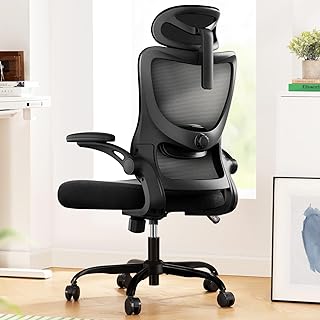
The SONGMICS has fully removable armrests—a huge advantage if standard armrest heights don’t match your frame. Minimum seat height is 17.5 inches. The seat is firm and not overly padded, which some shorter users prefer because it doesn’t compress under their weight the way memory foam does.
What makes this chair shine for shorter people: the base is low-profile and the casters roll smoothly. If you pair it with a separate footrest (a budget-friendly addition), you get a stable, adjustable setup that costs less than a single premium chair. Per 518 Amazon reviews, the backrest is supportive but not aggressive, and the recline is moderate.
Footrests and Accessories for Short Users
If your feet don’t touch the floor even after adjusting the chair to its lowest setting, a footrest isn’t optional—it’s necessary. A footrest at the right height prevents your legs from dangling, which reduces pressure on your lower back and improves circulation.
Look for a footrest with a slight angle (5–10 degrees) that lets your feet rest naturally. Pairing a budget chair with a budget footrest often costs less than upgrading to a premium chair, and the ergonomic benefit is real.
Some budget chairs come with a footrest ring (a small circular platform attached to the base). These work for some people but are often too high or too small. A separate footrest gives you more control.
Assembly and Durability for Budget Models
Budget office chairs typically require assembly—expect 20–45 minutes with basic tools. Per owner reports across multiple models on Reddit’s r/OfficeChairs, the gas cylinders on budget chairs are reliable for 3–5 years of daily use, though some fail earlier. The mesh and fabric hold up reasonably well if you don’t eat at your desk or spill frequently.
The base and casters are the weakest point on budget models. If you have hardwood or tile floors, the casters will scratch unless you use a chair mat. The wheels on budget chairs are lighter-duty plastic than on premium models, so they wear faster on rough surfaces.
How Short People Should Measure for Fit
Before ordering, measure your inseam (inside leg length from crotch to ankle). If your inseam is under 28 inches, you’re in the “petite” range and need a minimum seat height of 16–17 inches. If your inseam is 28–30 inches, 17–18 inches works.
Sit in the chair (if possible at a showroom) or check owner photos. Your feet should rest flat on the floor with your knees at roughly 90 degrees. Your elbows should also be at roughly 90 degrees when your hands rest on the armrests or desk. If the armrests are too high and you can’t adjust them, that’s a deal-breaker.
Many shorter people overlook seat depth—it’s just as important as height. A seat that’s too deep forces you to sit at the edge, which ruins lumbar support.
FAQ
Q: What’s the return policy if the chair doesn’t fit after I receive it? A: Most major retailers (Amazon, Wayfair, Overstock) offer 30-day returns on office chairs. Check the specific product page for the seller’s return window. Some brands offer extended return periods (up to 60 days) if you register the chair. Keep the packaging until you’re sure the fit works.
Q: Do these budget chairs work with standing desks? A: Yes, but verify the height range. If your standing desk adjusts from 28 to 48 inches, you need a chair that reaches at least 28 inches at its highest setting. Most budget chairs max out around 20–22 inches, so they work well with standard desks (29–30 inches) but may feel too low if you pair them with a standing desk at its standing height. Use the chair for seated work and a stool or different seating for standing mode.
Q: Should I buy a chair with or without armrests? A: If standard armrests don’t fit your height, removable or adjustable ones are better. Many shorter users work without armrests and use a desk that’s the right height instead. Armrests are helpful but not essential if the chair height and backrest are correct.
Q: Will a budget office chair last as long as a premium one? A: Budget chairs typically last 3–5 years of daily use before the gas cylinder or casters degrade. Premium chairs often last 7–10 years. For a short-term setup or if you’re testing whether a dedicated office chair helps your posture, budget is reasonable. If you plan to use the same chair for 10+ years, the cost-per-year of a premium chair is actually lower.
Q: What’s the difference between mesh and fabric on budget chairs? A: Mesh breathes better and is easier to clean. Fabric is softer and warmer but traps dust and heat. Mesh is the better choice if you live in a warm climate or work long hours. Fabric is fine if you have good ventilation and don’t mind cleaning it monthly.
Wrapping Up
Short people don’t need a special category of office chair—they need standard chairs with specs that actually fit smaller frames. Focus on minimum seat height (16–17 inches), seat depth (under 18 inches), and a backrest that doesn’t overwhelm your torso. A budget footrest is often a cheaper and better solution than overpaying for a premium chair.
The four chairs above all fit these criteria. Pick the one that matches your priorities: the Furmax for lowest height, the Hbada for lumbar support, the Yaheetech for small spaces, or the SONGMICS if you need removable armrests. Pair your choice with a footrest if needed, and you’ll have a setup that supports your back and doesn’t leave your feet dangling.