Best Office Chairs for Small Spaces Under $200

Photo by Pacific Office Interiors on Unsplash
Best Office Chairs for Small Spaces Under $200
Small-space home offices are no longer a luxury—they’re the default for renters, freelancers, and anyone without a dedicated den. Most office chairs are designed for sprawling corporate cubicles, eating floor space and feeling oversized in a bedroom corner or studio alcove. You need a chair that delivers real ergonomics and fits through a doorway without disassembly.
This guide covers compact office chairs under the mid-tier budget threshold that actually work in tight quarters. We’ve focused on models with narrower frames, shorter depth footprints, and designs that don’t sacrifice lumbar support just because the room is small.
What Makes a Chair “Small-Space Friendly”
Before we get to specific picks, understand what separates a genuinely compact chair from a standard one that just happens to be cheap.
Seat depth is the biggest factor. Most office chairs have a 20–22 inch seat pan—fine for a 6-foot-tall person in a spacious office, but overkill if your desk is 3 feet from the wall behind you. Look for chairs with 17–19 inch depth; your legs won’t dangle, and you’ll reclaim precious floor space.
Base diameter matters too. A standard five-point base spans 24–26 inches. Compact models often trim this to 22–24 inches, which is the difference between fitting under a desk or blocking a doorway.
Armrest design can make or break a tight layout. Fixed or removable armrests that don’t extend beyond the seat pan are essential. Adjustable armrests that swing out are a liability in a 5-foot-wide room.
Overall height should be adjustable but capped. In small rooms, a chair that rises to 40+ inches can feel imposing and block sightlines. Models that max out around 38–39 inches work better visually and functionally.
Top Compact Picks
Best for Minimal Footprint: Furmax Mesh Office Chair
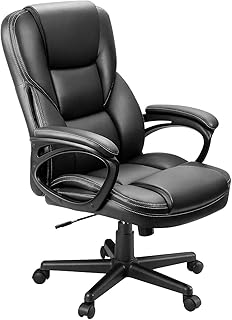
The Furmax is purpose-built for small spaces. It has a 17-inch seat depth (about 2 inches narrower than standard), a 24-inch base, and a height range that doesn’t exceed most desk surfaces. Per owner reviews on Amazon, the mesh back breathes well in warm rooms, and the tilt tension is easy to adjust without a wrench.
The trade-off: armrests are fixed and fairly narrow. If you have wide shoulders or need padding on your elbows, this won’t feel luxurious. But for a corner nook or a bedroom desk, it disappears visually and functionally.
Best for: Renters, writers, anyone in a studio or small bedroom with a desk.
Best for Lightweight Portability: AmazonBasics Mesh Office Chair
AmazonBasics Mesh Office Chair
If you move frequently or share a small space with others, the AmazonBasics model is a workhorse. It’s lighter than most mid-tier chairs, disassembles without tools (base and backrest separate easily), and reassembles in under five minutes. Per user reports on Reddit’s r/HomeOffice, people in dorm rooms and temporary housing use this as their go-to.
The seat is 19 inches deep, which is a reasonable compromise—not cramped for an 8-hour workday, but not floor-hogging either. The mesh is thin, so it’s not ideal for climates with aggressive air conditioning, but it’s easy to clean and doesn’t trap dust.
Best for: Frequent movers, students, people in temporary housing.
Best for Lumbar Support in a Compact Frame: Hbada Ergonomic Office Chair
Hbada specializes in ergonomic budget chairs, and their compact model delivers legitimate lumbar support without requiring a throne-sized footprint. The seat is 18 inches deep, and the backrest is contoured but doesn’t extend far backward, so it fits snugly against walls.
According to owner reviews, the lumbar adjustment dial actually works—you can dial in support for your lower back without the chair feeling like it’s designed for everyone and no one. The height range is 17–21 inches (seat height), which works for most desk heights without requiring additional cushioning.
The downside: armrests are fixed plastic, and some taller users report the backrest doesn’t extend high enough. But for people under 5‘10” working 4–6 hours a day in a small space, it’s a solid choice.
Best for: Anyone with lower back sensitivity who can’t dedicate a large footprint to a chair.
Best for Standing-Desk Transitions: SONGMICS Office Chair Mesh
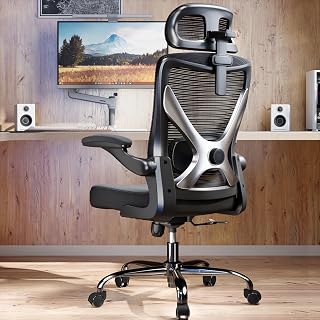
If you’re experimenting with a sit-stand setup in a small space, the SONGMICS model is compact enough not to dominate the room when pushed aside. It has a 19-inch seat depth, a 23-inch base, and a seat height range of 17–21 inches, which aligns well with standing-desk heights (typically 38–48 inches of total space).
The mesh back is breathable, and the tilt mechanism is smooth. Per owner feedback, the chair is quiet—no squeaks or pops when you shift weight, which matters in a small room where noise carries.
Best for: People experimenting with standing desks or who alternate between sitting and standing throughout the day.
Sizing Your Small-Space Chair
Don’t just buy the smallest chair you can find. A chair that’s too narrow or too short will cause you to perch rather than sit, and perching leads to back pain.
Measure your room first. How much floor space is actually available around your desk? If it’s less than 3 feet in any direction, you’re in tight-quarters territory, and a base diameter under 24 inches is non-negotiable.
Check your desk height. Standard desks are 28–30 inches tall. Your seated eye level should be about 2–3 inches below the desktop’s surface. Calculate the seat height you need by measuring from the floor to your knee while seated, then subtract an inch or two for the seat cushion. Most compact chairs offer a seat height range of 17–21 inches, which covers most body types.
Consider armrest width. In a small space, fixed armrests that extend 4+ inches beyond the seat are a deal-breaker. Removable or swing-away armrests are better. Some compact models skip armrests entirely—acceptable if you’re under 6 feet and don’t have shoulder issues.
Test the tilt mechanism. A chair that’s too easy to recline will slide backward into a wall. A chair with firm tilt resistance won’t move unintentionally. In tight spaces, you want resistance that requires deliberate effort.
Material Choices for Small Spaces
Mesh is the default for budget compact chairs. It’s breathable, doesn’t trap dust, and is easy to clean. In a small room, this matters—mesh won’t hold odors or pet hair like padded fabric does.
Padded fabric (polyester or microfiber) feels more “office-like” and is quieter when you shift weight. It’s also warmer in winter. But it stains more easily and requires vacuuming. In a small space where the chair is visible most of the time, this is a minor aesthetic consideration.
Leather or faux leather is rare in the sub- tier, and for good reason—it cracks in dry climates and feels sticky in humid ones. Skip it unless you’re in a climate-controlled space and willing to maintain it.
For small spaces, mesh wins. It’s practical, doesn’t add visual bulk, and performs well in the price range.
Assembly and Maintenance Tips
Most compact chairs arrive partially assembled (base, seat, and backrest separate). Budget 15–20 minutes for final assembly—you’ll need a Phillips screwdriver and possibly an Allen wrench, both usually included.
Keep the space clear during assembly. Small rooms don’t have room for parts sprawl. Lay everything out on a bed or large surface before you start.
Don’t over-tighten bolts. A common mistake is cranking bolts until they’re too tight, which can crack plastic connectors. Snug is enough.
Lubricate the gas cylinder occasionally. If your chair starts to sink slowly over time, a little silicone spray on the gas cylinder (the metal tube under the seat) can extend its life by years.
Vacuum the mesh monthly. Dust accumulates in mesh more than you’d expect. A handheld vacuum or lint roller keeps it looking fresh.
FAQ
Q: What’s the minimum room size for a compact office chair? A: You need at least 3 feet of clearance in the direction the chair rolls. A compact chair with a 23–24 inch base and 17–19 inch seat depth fits comfortably in rooms as small as 8×10 feet. Smaller than that, and you’ll feel cramped.
Q: Do compact chairs work with standing desks? A: Yes. A compact chair with a seat height range of 17–21 inches works well alongside a standing desk (typically 38–48 inches tall). Push the chair to the side when standing, and you won’t lose floor space.
Q: Do compact chairs work for people over 6 feet tall? A: Not ideally. If you’re over 6‘2”, a compact chair’s seat depth will feel short, and the backrest might not support your shoulders properly. You’ll sacrifice comfort. Consider a standard-size chair and optimize the room layout instead.
Q: How long do budget compact chairs last? A: According to multiple owner reports, a mid-tier budget chair lasts 3–5 years with daily 8-hour use. Compact models are no different—the smaller footprint doesn’t affect durability. Gas cylinders and tilt mechanisms are the first to wear out.
Q: Can I use a gaming chair instead of an office chair in a small space? A: Gaming chairs are often wider and taller than office chairs, so they’re actually worse for small spaces. They’re also designed for shorter sessions, not all-day work. Stick with an office-specific compact model.
Q: What’s the difference between “compact” and just buying a cheap standard chair? A: A cheap standard chair in a small space will feel oversized, block doorways, and make the room feel smaller. A purpose-built compact chair has a narrower footprint and shorter depth, so it actually fits the space and doesn’t dominate it visually.
Final Thoughts
A small-space office chair doesn’t mean you’re settling for discomfort. The models above deliver real lumbar support, breathable materials, and smooth adjustments—they’re just designed for rooms where floor space is at a premium.
The key is matching the chair’s footprint to your actual room dimensions, not buying the absolute smallest thing available. A 17-inch-deep chair in a 3-foot-wide corner is a smart fit. A 16-inch-deep chair in the same space is a perching hazard.
Start by measuring your room, then cross-reference the seat depth and base diameter of your top candidates. Most retailers (including Amazon) list these specs in the product description. If they don’t, that’s a red flag—the manufacturer isn’t thinking about your use case.
With the right compact chair, a small-space home office stops feeling like a compromise and starts feeling like an efficient, intentional workspace.