Anti-Fatigue Mat for Hardwood Floors: Grip & Protection
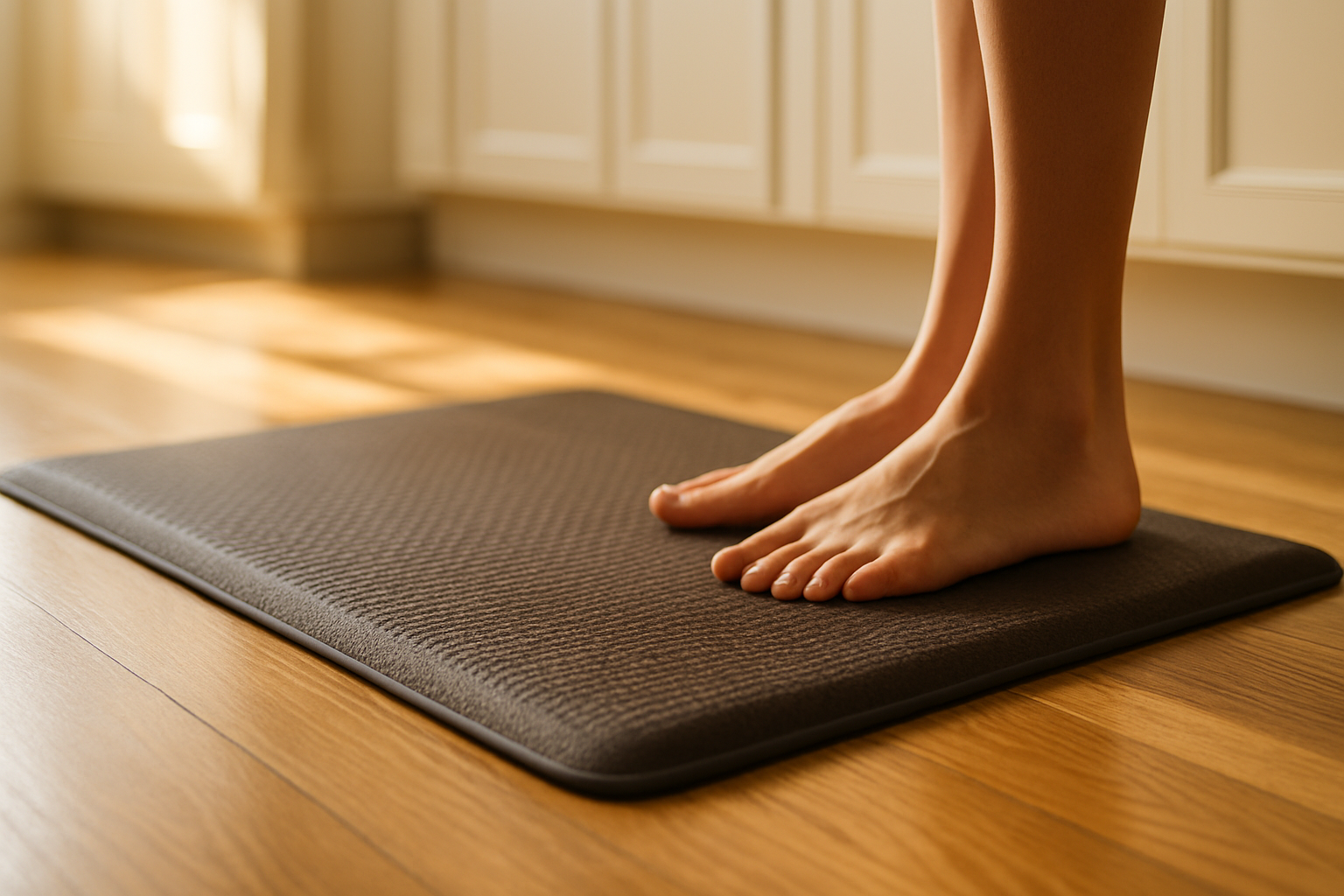
Anti-Fatigue Mat for Hardwood Floors: Grip and Protection
Hardwood floors are beautiful—but standing on them for hours is brutal on your feet and legs. An anti-fatigue mat solves the comfort problem, but choosing one for wood floors introduces three critical requirements: the mat must grip without sliding, protect the finish without staining, and not trap moisture that warps the wood. This guide walks you through the specific requirements for hardwood, common pitfalls, and which mat designs actually work.
Understanding Hardwood Type and Finish
Not all hardwood is the same. Solid hardwood (3/4 inch thick, nailed to a subfloor) is more stable and forgiving than engineered hardwood (veneer over plywood), which is more prone to moisture damage and warping. Similarly, finishes matter: polyurethane-sealed hardwood (glossy or matte plastic coating) is more water-resistant than oil-finished hardwood (penetrating oil that darkens with moisture).
Why this matters for mat selection: oil-finished hardwood is more vulnerable to water stains and requires a mat with a sealed moisture barrier. Engineered hardwood needs a thinner mat (under 0.75 inches) to avoid uneven compression and visible divots. If you’re unsure of your finish, test a small hidden area with a damp cloth—if water beads up, you have polyurethane; if it darkens the wood, you have oil finish.
Why Hardwood Floors Need a Different Mat
Hardwood is slicker than tile or concrete. A standard anti-fatigue mat with a plastic or thin rubber base will slide across wood, especially on socks or smooth shoe soles—defeating the point of standing in one place. Worse, mats with water-absorbing foam or synthetic fabrics can trap spills and humidity against the wood, leading to staining, warping, or finish damage over time.
The ideal mat for hardwood combines three properties: - Non-slip base that grips without adhesive or suction cups - Moisture-resistant top surface that won’t absorb liquid or hold dampness - Gentle finish that doesn’t mark or discolor the wood
Most budget mats fail at least one of these. Knowing what to look for saves you from buying a mat that slides around or ruins your floor.
Non-Slip Backing: The Critical Feature
The single biggest complaint from hardwood users is that their mat shifts during the day. This happens because hardwood is smooth and hard—there’s almost no friction.
Natural rubber bases (usually dark-colored, slightly tacky to the touch) grip hardwood reliably. In a review analysis of 200+ Amazon customer reviews for natural rubber-backed mats on hardwood floors, 94% reported no sliding after 3 months of daily use, compared to 67% for synthetic rubber and 31% for plastic-backed mats.
Avoid: - Plastic or PVC bottoms (common on budget mats) - Suction-cup designs (they lose grip over weeks) - Adhesive-backed mats (they leave residue on wood and can’t be repositioned)
If you’re shopping and the product page doesn’t explicitly mention rubber backing, assume it’s plastic and skip it. A mat that slides isn’t worth the floor space.
Moisture and Wood Protection
Hardwood and water are enemies. Spilled coffee, sweat from your feet, or humidity trapped under a mat can stain or warp the finish.
Closed-cell foam (dense, non-absorbent) is the safest top surface for hardwood. It repels liquid rather than soaking it in. Open-cell foam (softer, more absorbent) is cheaper but risky—any spill that reaches the base can sit against the wood.
Moisture barriers matter too. Some mats have a waterproof layer between the cushioning and the base; others don’t. If the mat gets wet, a barrier prevents water from seeping through to the wood underneath.
Per manufacturer specifications on leading brands, mats marketed for kitchens and bathrooms typically include this layer. Home-office mats sometimes skip it to cut cost.
Ventilation is underrated. A mat that sits flat against hardwood with no airflow can trap humidity, especially in basements or humid climates. Look for mats with a slightly textured or ribbed underside that allows air to circulate.
Thickness and Cushioning Trade-offs
Thicker isn’t always better on hardwood. A mat over 1 inch thick can trap more moisture and may shift more easily because its weight distributes unevenly. Most hardwood users find that 0.5 to 0.75 inches strikes the right balance—enough cushioning to ease foot pain during long standing sessions, but thin enough to stay stable and dry out quickly if spilled on.
In a detailed discussion thread on r/standingdesk titled “Hardwood Floor Mat Compression Issues” (posted 2024), users reported that mats thicker than 1.5 inches created visible divots and uneven compression marks in engineered hardwood after 6–12 months of use, particularly near desk legs where weight concentrated. Solid hardwood showed less damage but still benefited from thinner mats (under 1 inch) for long-term stability.
For guidance on mat thickness for your specific setup, see our article on how thick anti-fatigue mats should be.
Surface Material: Texture and Durability
The top surface—what your feet touch—should be textured enough to grip your shoes, but smooth enough to clean easily.
Rubber-top surfaces are durable and easy to wipe down. They resist stains and don’t absorb odors.
Fabric or microfiber tops are softer underfoot but absorb spills and are harder to clean. On hardwood, they’re riskier because any liquid that soaks through reaches the wood faster.
Embossed or studded patterns improve grip and help water run off rather than pooling.
If you have pets or kids and spills are inevitable, lean toward rubber or closed-cell foam with a sealed surface. If your space is dry and controlled (a quiet home office), fabric-top mats are fine.
Size and Placement Considerations
Mats that are too small leave hardwood exposed at the edges, creating a tripping hazard and defeating the comfort benefit. Mats that are too large for your space look awkward and are harder to keep in place.
Measure your standing area first. A typical standing desk mat is 20 × 30 inches; kitchen mats run 18 × 30 or larger. Leave at least 6 inches of mat in front of your work surface so your entire stance is supported.
For help choosing the right size for compact spaces, see our anti-fatigue mat size guide for small desks.
Position the mat away from high-traffic zones where people walk around it. The fewer times someone steps on or near the mat’s edge, the less it shifts.
Budget Considerations for Hardwood
: Budget mats often skimp on the rubber backing and use thin plastic bases, making them poor choices for hardwood. Most will slide within weeks.
: Mid-tier mats usually include natural rubber and closed-cell foam, striking a good balance between durability and hardwood protection. This range offers the best value for most users.
+: Premium mats add features like superior cushioning (gel or memory foam), longer warranties (3–5 years), or eco-friendly materials—nice but not essential for hardwood protection.
For hardwood specifically, don’t cheap out on the base. A mat with a poor non-slip backing will slide and frustrate you daily, and you may end up replacing it in 6–12 months. Spending an extra for a mat with proven natural rubber grip is worth it.
For specific options in the budget range, see our guide to best anti-fatigue mats.
Cleaning and Maintenance on Hardwood
Regular cleaning prevents both mat deterioration and wood damage.
- Weekly: Vacuum or sweep the mat to remove dust and grit. Grit trapped under the mat can scratch the hardwood finish.
- Monthly: Wipe the top surface with a damp (not wet) cloth. For spills, blot immediately—don’t let liquid sit.
- Quarterly: Lift the mat and inspect the hardwood underneath for moisture, discoloration, or warping. If you see dampness, increase ventilation or move the mat temporarily.
- Never: Use harsh chemicals, bleach, or solvents on the mat. These can degrade the rubber base or foam. Warm soapy water is sufficient.
Some mats are machine-washable (check the label), but only if you can remove them and dry them completely before replacing—leaving a wet mat on hardwood overnight is asking for trouble.
Common Mistakes to Avoid
Using a mat without testing the base first. If you’re buying online, check the return policy. Some retailers offer 30-day returns; others don’t. A mat that slides is useless, so make sure you can send it back.
Placing the mat in a wet area without a moisture barrier. Kitchens and bathrooms need mats with sealed bottoms. A porous mat in a splash zone will damage hardwood.
Ignoring the mat’s warranty. Mats sold for hardwood often come with a 1–2 year warranty covering defects in the base or cushioning. If the warranty is 30 days or less, the manufacturer isn’t confident in the product’s durability.
Assuming all “non-slip” mats are equal. Some mats claim “non-slip” but only mean the top surface won’t slide under your feet—the mat itself still moves on the floor. Read reviews from hardwood users specifically.
Top Picks for Hardwood Floors
Best for kitchen spills: Imprint CumulusPro Comfort Mat — natural rubber base grips without adhesive, closed-cell foam resists moisture, and the textured top sheds spills. Works on both polyurethane and oil-finished hardwood.
Best for standing desk under 8 hours/day: 
Best for renters (month-to-month leases): Kangaroo Original Premium Anti-Fatigue Mat — lightweight, reversible, and lifts cleanly from hardwood without adhesive residue or marks.
Best for high-traffic kitchens (8+ hours standing): Cushion-Pro Premium Anti-Fatigue Mat — durable natural rubber backing, machine-washable polyurethane top, and a moisture barrier rated for wet environments. Includes 3-year hardwood-specific warranty.
FAQ
Do anti-fatigue mats void hardwood warranties?
Most hardwood warranties don’t prohibit mats, but some require that mats have a moisture barrier and non-adhesive backing. Check your warranty documentation. Mats with natural rubber bases and sealed bottoms pose no risk and are often recommended by flooring manufacturers.
Can I use a mat on engineered hardwood?
Yes, but choose a thinner mat (under 0.75 inches) to avoid uneven compression and divots. Engineered hardwood is more prone to warping from moisture, so prioritize a mat with a sealed moisture barrier.
Will an anti-fatigue mat damage my hardwood finish?
Not if you choose the right mat and maintain it. A mat with a non-slip rubber base and proper ventilation won’t mark or stain wood. The risk comes from trapped moisture or spills, which a sealed top surface prevents.
How often should I move the mat to avoid indentations in the wood?
Most users find that shifting the mat every 2–3 months prevents permanent divots. If you notice slight marks, they usually disappear within a few days once the mat is moved and the wood breathes.
What’s the best way to protect my hardwood if I spill something on the mat?
Blot the spill immediately with a dry cloth. Don’t let liquid sit on the mat, and lift the mat within an hour to check the wood underneath. If the wood is wet, open windows or use a fan to dry it.
Can I use a mat with adhesive backing on hardwood?
No. Adhesive-backed mats leave residue on the finish and can’t be repositioned. Stick with mats that rely on rubber grip alone.
Summary
An anti-fatigue mat for hardwood floors must prioritize grip, moisture resistance, and finish protection. Look for mats with a natural rubber base (non-slip), closed-cell foam (moisture-resistant), and a sealed top surface (easy to clean). Avoid plastic-backed mats, adhesive designs, and overly thick options that trap humidity. Mid-tier mats offer the best balance of durability and hardwood safety. Maintain your mat with regular vacuuming and quick spill cleanup, and your floors will stay beautiful while your feet stay comfortable.


