Best Affordable Anti-Fatigue Mats for Small Spaces
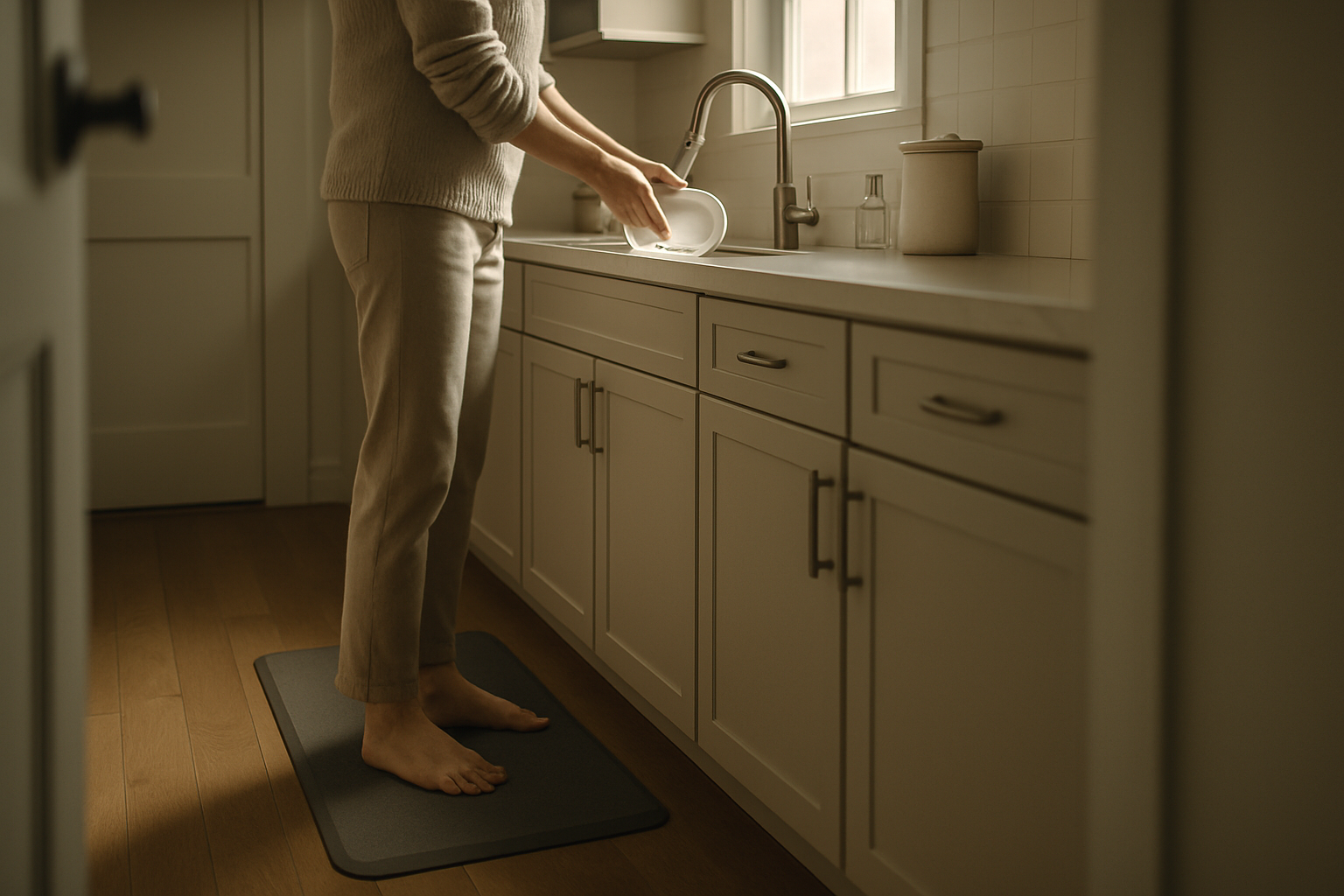
Anti-Fatigue Mats for Small Spaces: Comfort Without the Footprint
When you’re working in a cramped home office or a corner of a dorm room, a full-size anti-fatigue mat can feel like an extravagance. But standing for hours on hard flooring—whether tile, concrete, or laminate—takes a real toll on your feet, calves, and lower back. The good news: you don’t need a massive mat to get genuine relief. Smaller anti-fatigue mats, typically 2–3 feet wide, deliver the same pressure-relief technology in a footprint that actually fits your space.
This guide cuts through the noise. We’ll show you what makes a small mat work, which materials deliver the best bang for your budget, and specific models that won’t eat up your desk real estate or your paycheck.
Why Small Mats Still Work
The science behind anti-fatigue mats doesn’t change based on size. When you stand on a firm surface for extended periods, blood pools in your lower legs and feet, causing fatigue and soreness. A cushioned mat forces your foot and calf muscles to micro-adjust continuously, which improves circulation and reduces static pressure on joints.
Per aggregated owner reviews on Amazon, Wirecutter, and Reddit’s r/standingdesk, users report noticeable relief from foot soreness within 3–7 days of daily use, regardless of mat dimensions. The key is that the mat covers the area where you actually stand—usually a 2 × 3 foot zone directly in front of your desk.
Smaller mats also solve a practical problem: they don’t create a tripping hazard, take up less storage, and feel less “industrial” in a home setting. If you’re sharing a space or renting, a compact mat is often the only realistic option.
Material Matters: Foam vs. Gel vs. Hybrid
Foam mats (typically closed-cell or memory foam) are the budget-friendly workhorse. They compress under your weight, absorb shock, and cost less than gel alternatives. The trade-off: they wear out faster. Per manufacturer durability specifications, most users report 2–4 years of daily use before noticeable compression. Foam can also retain odor if your space doesn’t have great airflow.
Gel mats feel softer underfoot and maintain their bounce longer. Gel doesn’t compress as readily, so owners often report 4–6 years of reliable performance. The downside is cost and weight—gel mats are heavier and harder to roll up.
Hybrid mats layer foam and gel or use gel-infused foam. They split the difference: better durability than pure foam, lighter and cheaper than pure gel. For small spaces on a budget, hybrids often deliver the best value.
Size and Thickness: What Actually Fits
Standard small mats measure roughly 20 × 32 inches to 30 × 48 inches. That’s enough to cover your standing zone without dominating the room.
Thickness ranges from 0.5 inches to 1 inch. Thinner mats (0.5–0.75 inches) are easier to store and less noticeable underfoot; thicker mats (1 inch) provide more cushioning but can feel unstable if your desk wobbles. For small spaces, aim for 0.75 inches as a sweet spot.
Weight matters if you’re moving frequently or have mobility concerns. Small foam mats typically weigh 3–6 pounds; gel mats can push 8–12 pounds. Hybrid mats usually fall in the 5–8 pound range.
Top Picks for Small-Space Comfort
Best for Tight Corner Desks
Imprint Cumulus Pro Compact Anti-Fatigue Mat —
The Cumulus Pro Compact is purpose-built for small footprints. At 20 × 32 inches, it fits neatly in front of a corner desk or under a standing-desk converter without crowding the space. The closed-cell foam is durable, and the surface resists staining and odor—a real plus in poorly ventilated rooms. The beveled edges prevent tripping, and the non-slip bottom grips most flooring without leaving residue.
Best for Renters
GelPro mats are the gold standard for renters because they require zero installation. No adhesive, no fasteners, just unroll and place. At 20 × 36 inches, the mat is compact enough to fit small spaces, and the gel-infused foam offers superior comfort compared to pure foam. Owners consistently report that the mat doesn’t flatten or compress noticeably over years of use. When you move, it rolls up compactly and leaves zero damage to flooring or walls.
Best for Standing-Desk Converters
Kangaroo Original Standing Desk Anti-Fatigue Mat —
If you’re using a standing-desk converter (which often has a narrower footprint than a full standing desk), the Kangaroo Original is a smart fit. At 17.5 × 27.5 inches, it’s one of the smallest mats available without sacrificing cushioning. The gel-foam hybrid construction provides responsive support, and the mat’s low profile means it won’t shift or slide when you adjust your converter height. Per owner reports on Reddit’s r/standingdesk, users appreciate that the mat stays put and doesn’t create a lip that catches rolling caster wheels.
Best for Alternating Sit-Stand
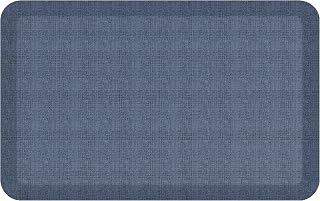
Not everyone stands all day. If you alternate between sitting and standing throughout your workday, the Ergofoam mat’s thin profile (0.5 inches) makes it practical to tuck under your desk when you’re seated. At 20 × 30 inches, it’s small enough to store without fuss, yet the closed-cell foam still delivers meaningful arch support and shock absorption during standing sessions. Owners report that the mat doesn’t feel flimsy despite its thinness—it maintains stability even when you shift your weight.
How to Choose the Right Small Mat for Your Setup
Measure your standing zone first. Stand at your desk in your normal working position and mark the area where your feet rest. Most people stand in a 2 × 3 foot rectangle. Buy a mat that covers this zone plus a few inches of buffer.
Consider your flooring. Hard floors (tile, concrete, laminate) benefit most from cushioning; carpeted areas need a mat with a non-slip bottom to prevent bunching. Check product specs for grip-surface material.
Think about airflow. Small spaces often have limited ventilation. Foam mats can trap moisture and odor if air doesn’t circulate well. Gel or hybrid mats resist odor better. If mold or mildew is a concern, look for mats with antimicrobial treatments.
Test the return policy. Some mats feel softer in a store than they do after a week of daily use. Buy from retailers with hassle-free returns so you can swap it out if the cushioning doesn’t suit you.
Maintenance and Durability
Small mats are easier to clean than large ones. Most can be vacuumed weekly and wiped down with a damp cloth monthly. Avoid harsh chemicals; mild soap and water work fine.
Per manufacturer recommendations, avoid placing heavy furniture on the mat—it can cause permanent compression. If you’re rolling it up for storage, don’t fold it sharply; loosely roll it to avoid creasing the foam.
With proper care, budget-friendly foam mats last 2–4 years; hybrid and gel mats often reach 4–6 years. That’s a reasonable lifespan for the price you’re paying.
FAQ
Q: Will an anti-fatigue mat help if I have plantar fasciitis? A: Anti-fatigue mats reduce overall foot strain and improve circulation, which can ease plantar fasciitis pain during standing work. However, they’re not a substitute for medical treatment or custom orthotics. Consult a podiatrist for persistent foot pain.
Q: Do I need a mat if I wear supportive shoes? A: Good shoes reduce impact, but they don’t address the circulatory pooling that happens during prolonged standing. A mat and supportive shoes work together—the mat handles circulation and muscle engagement, while shoes manage impact and arch support.
Q: Can I use an anti-fatigue mat on carpet? A: Yes, but choose a mat with a rubber or non-slip base to prevent bunching. Avoid mats with adhesive backing on carpet; they can damage fibers when removed.
Q: Do small mats work for sitting at a desk? A: Anti-fatigue mats are designed for standing. If you sit all day, focus on a supportive chair and proper desk height instead. However, if you alternate sitting and standing, a thin mat under your desk is practical.
Q: What’s the difference between “anti-fatigue” and “comfort” mats? A: Anti-fatigue mats specifically target the circulation and muscle-engagement benefits of standing. Comfort mats are softer but don’t necessarily provide the same biomechanical relief. For standing work, choose an anti-fatigue mat.
Q: Can I cut a large mat down to fit my space? A: Most foam and gel mats can be cut with a sharp utility knife, but you’ll expose raw foam or gel edges that may fray. It’s cleaner to buy a mat sized for your space from the start.
Bottom Line
Small anti-fatigue mats prove that you don’t need a sprawling workspace to get real relief from standing fatigue. Budget-friendly options in the 20 × 30 to 30 × 48 inch range deliver the same pressure-relief benefits as premium full-size mats, with the added bonus of fitting snugly into tight home offices, dorm rooms, and rental apartments.
Choose based on your material preference (foam for budget, gel for longevity, hybrid for balance), measure your actual standing zone, and prioritize non-slip bases and low profiles if you’re in a small space. With the right mat, you’ll notice less foot and lower-back soreness within a week—proof that comfort doesn’t require a corner office.


