Budget Office Chairs for Short People Under $200

Photo by Pacific Office Interiors on Unsplash
Budget Office Chairs for Short People Under $200
Short people shopping for office chairs face a frustrating mismatch: most chairs are designed for average-height bodies, leaving petite users dangling their feet or hunching forward. The good news is that budget-friendly options exist—you just need to know what to measure and which brands actually deliver on adjustability. This guide walks you through finding a chair that fits your frame without overspending.
Why Standard Office Chairs Don’t Work for Short People
The typical office chair is engineered for someone 5‘6” to 6’. The seat height—the distance from the floor to the top of the cushion—usually bottoms out around 17–18 inches. For someone under 5‘4”, that’s too high: your feet dangle, your thighs don’t rest on the seat, and your lower back rounds forward. Over eight hours a day, that posture triggers back pain and poor circulation.
The problem compounds when you look at backrest height and armrest positioning. A chair designed for average frames places armrests too high and the backrest curve too far back, forcing short users into a slouch to make contact with lumbar support.
Budget-tier manufacturers often skip the engineering work to accommodate multiple body types, but a handful of sub- options do include adjustable components that work for petite frames. The trick is knowing which specs to hunt for.
Key Measurements to Check Before Buying
Seat Height Range
The single most important spec is the minimum seat height. Measure from the floor to the top of your thighs when you’re sitting upright with your feet flat. Per ergonomic standards, a good chair should let you adjust down to at least 16–17 inches; anything higher leaves short users stuck.
Check the product listing or manual for the “seat height range” (often listed as “minimum to maximum”). If it says “17–22 inches,” that chair will work. If it’s “18–24 inches,” skip it—your feet will still dangle.
Seat Depth
Seat depth—the front-to-back distance of the cushion—also matters for short people. A deep seat (18+ inches) can push your knees off the edge, cutting circulation. Look for chairs with a seat depth of 16–17 inches, which gives you proper thigh support without pressure behind your knees.
Backrest Height and Lumbar Curve
A high backrest doesn’t help if the lumbar support (the inward curve) is positioned for a taller spine. Ideally, the lumbar curve should sit at roughly the level of your natural lower-back curve. For short people, this is often lower on the backrest than standard designs place it.
Budget chairs rarely let you adjust lumbar support vertically, so read owner reviews carefully. Look for comments like “good for petite users” or “lumbar support hits the right spot for shorter frames.”
Armrest Height
Armrests that are too high force your shoulders up, creating neck and shoulder tension. When you’re sitting upright with your arms at your sides, your elbows should be at roughly 90 degrees with the armrest. Many budget chairs have fixed armrests, so measure the chair’s armrest height and compare it to your elbow height when seated.
Budget-Friendly Features That Actually Help
Adjustable Seat Height Mechanism
The pneumatic cylinder (the gas-filled tube under the seat) is what lets you raise and lower the chair. All budget office chairs have one, but quality varies. Look for owner reviews mentioning smooth adjustment and no “sticking” or sudden drops. A chair that’s hard to adjust won’t stay at your preferred height.
Tilt Tension and Recline Lock
A recline lock lets you prevent the backrest from tilting backward—useful if you want a stable, upright posture. Tilt tension controls how much force you need to lean back. For short people, a good tilt lock means you can lock the chair in place and not worry about it reclining unexpectedly when you shift your weight.
Footrest Options
Since your feet may not reach the floor comfortably, a footrest is a practical addition. Some budget chairs include one; others require a separate purchase. An integrated footrest (built into the chair) saves money and guarantees proper fit. If you’re buying separately, a basic footrest in the range will work.
Mesh vs. Fabric Seat
Both work for short people; the choice is about comfort and durability. Mesh breathes better during long sessions, reducing heat buildup. Fabric is warmer and often more comfortable initially but traps heat. For budget-tier chairs, mesh is more common and tends to hold up better over time.
How to Measure Your Space and Fit
Before ordering, measure three things:
- Your inseam (from your hip bone to your ankle, sitting down). This tells you roughly how much vertical space your legs need.
- Your desk height. A standard desk is 28–30 inches. Your chair’s seat height should let your elbows sit at roughly 90 degrees when your forearms rest on the desk. If your desk is higher or lower, you’ll need a chair that adjusts further than standard.
- Your available floor space. Budget office chairs typically have a 5-wheel base that’s 25–27 inches wide. If your workspace is tight, measure the footprint before buying.
Top Picks: Budget Chairs for Short People Under $200
For Maximum Adjustability
(Price: ~ as of July 2026; verify before purchase)
The Furmax drops to a 16-inch minimum seat height, one of the lowest in the budget range. It has a compact seat depth (16.5 inches) and a breathable mesh back. Owner reviews consistently note that it works well for users under 5‘4”, and the pneumatic adjustment is smooth. The backrest is mid-height (not a high-back), which actually helps shorter people maintain proper posture without overreaching.
For Small Home Offices
(Price: ~ as of July 2026; verify before purchase)
The Hbada is designed with a lower overall profile. Seat height adjusts down to 17 inches, and the entire chair is slightly more compact than full-size models. It’s popular on r/HomeOffice threads for small-space setups. The mesh back is breathable, and the seat is firm—good for all-day support without sinking in after a few months.
For All-Day Comfort
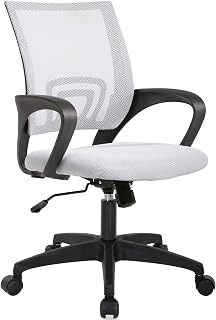
(Price: ~ as of July 2026; verify before purchase)
This chair balances adjustability and comfort. Seat height ranges from 17–21 inches, and the lumbar support is positioned lower than many budget competitors, making it more suitable for shorter spines. Multiple owner reviews mention it as a solid choice for users 5‘2”–5‘5”. The mesh is durable, and the tilt mechanism is smooth.
For Integrated Footrest
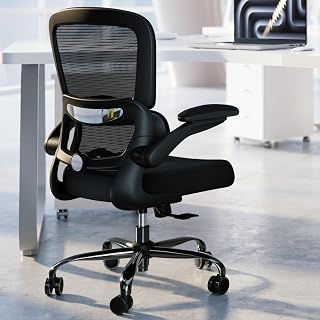
(Price: ~ as of July 2026; verify before purchase)
If you want a footrest without buying separately, the Smugdesk includes one built into the base. Seat height adjusts to 17 inches, and the footrest is angled to support shorter legs comfortably. The chair has a mid-back design and fixed armrests, which is fine if your desk height matches standard (28–30 inches).
For High-Back Support
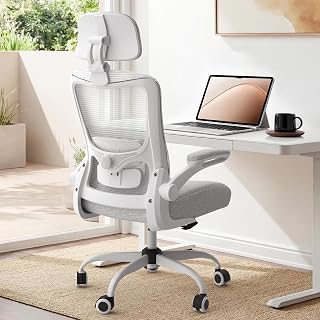
(Price: ~ as of July 2026; verify before purchase)
The Devoko is a high-back chair that still accommodates short people. Seat height goes down to 17 inches, and the tall backrest doesn’t feel oversized because the lumbar support is positioned lower. Owner reviews from petite users note that the high back provides good spine support without requiring you to lean back awkwardly. It’s one of the few budget high-back options that actually works for shorter frames.
Minimum Seat Height Comparison
| Chair | Minimum Seat Height | Seat Depth | Best For |
|---|---|---|---|
| Furmax | 16 inches | 16.5 inches | Users under 5‘3” needing lowest possible height |
| Hbada | 17 inches | 17 inches | Small spaces; compact overall profile |
| BestOffice | 17 inches | 17 inches | Lower lumbar positioning for short spines |
| Smugdesk | 17 inches | 17.5 inches | Users wanting integrated footrest |
| Devoko | 17 inches | 17.5 inches | High-back preference with low seat height |
Adjusting Your Chair for Proper Ergonomics
Once you have your chair, proper setup matters. [internal:how-to-adjust-an-office-chair-for-proper-ergonomics#short-people-footrest-setup] covers the full process with guidance specific to petite users, but here’s the short version:
- Seat height: Adjust so your feet rest flat on the floor or footrest, and your thighs are parallel to the ground (roughly 90 degrees at the hip).
- Backrest position: Tilt the backrest so it supports your lower back without forcing you to lean back. Lock the tilt if your chair has that feature.
- Armrests: If they’re adjustable, set them so your elbows are at 90 degrees. If fixed, you may need to lower your desk or raise your seat slightly and add a footrest.
- Desk height: Your forearms should rest flat on the desk with elbows at 90 degrees. If the chair’s height doesn’t match your desk, a footrest (or desk riser) can fix the mismatch.
Lumbar Support on a Budget
You might wonder if budget chairs actually provide meaningful lumbar support. Yes, but only if the curve is positioned correctly for your frame. For short people, the lumbar curve should sit 3–4 inches above the seat base. This positions it at your natural lower-back curve rather than higher on your spine where standard designs place it.
Most budget chairs have a fixed lumbar curve—you can’t adjust it vertically. That’s why reading owner reviews is crucial. Look for comments mentioning fit for shorter users or petite frames. If the reviews are silent on that, assume the lumbar support is positioned for average-height bodies and might not work for you. [internal:lumbar-support-in-budget-office-chairs-does-it-matter#short-spine-positioning] provides deeper guidance on evaluating lumbar placement.
Mesh vs. Fabric: Which Budget Material Lasts?
Mesh is slightly more durable in budget-tier chairs because it doesn’t compress as much over time. Since you’ll be using a lower seat height (less weight distributed over a smaller cushion area), mesh helps prevent the “sagging” that fabric sometimes develops after 2–3 years of daily use. [internal:mesh-vs-fabric-office-chair-comfort-durability-for-budget-buyers#short-user-considerations] covers this comparison in detail.
Common Mistakes Short People Make When Shopping
Assuming all adjustable chairs work. A chair that “adjusts” from 18–24 inches is still too high if you’re under 5‘3”. Always check the minimum height against the comparison table above.
Ignoring footrest needs. If your feet don’t touch the floor, a footrest isn’t optional—it’s essential for circulation and posture. Budget for it upfront.
Buying without measuring your desk. A chair that’s the “right” height for your body might be too low or high for your desk. Measure both before ordering.
Overlooking armrest height. Fixed armrests that are too high are a common complaint in budget chairs. If you can’t adjust them, measure carefully before purchasing.
FAQ
Q: What’s the difference between pneumatic and mechanical seat adjustment? A: Pneumatic adjustment uses a gas cylinder to let you raise and lower the seat smoothly with a lever. Mechanical adjustment typically uses a screw or lever that requires more effort. All budget chairs use pneumatic systems; they’re easier to use and more reliable.
Q: Do short people need a special monitor arm? A: Not necessarily. A monitor arm helps if your monitor sits too high or low relative to your eye level. Since you’re using a lower chair, your monitor may naturally sit lower too. Adjust your monitor so the top of the screen is at or slightly below eye level. If it’s too high, a monitor arm or riser can help.
Q: Should I buy a chair with a footrest or add one separately? A: If the chair includes one, great—it’s one less thing to buy and guarantees fit. If not, a separate footrest works fine. Either way, plan to include a footrest in your total budget.
Q: What if my desk is higher than standard (28–30 inches)? A: A higher desk requires a higher chair seat. If you’re short and your desk is tall, you’ll need a chair that adjusts higher than average, or you’ll need to raise your seat and use a footrest. Measure your desk first.
Q: Are mesh chairs better for short people? A: Mesh and fabric both work; mesh is slightly more durable in budget chairs and breathes better. The bigger factor is seat height and lumbar positioning, not material.
Q: How long do budget office chairs typically last? A: Budget chairs usually last 3–5 years with daily use. Premium chairs often last 7–10 years. For a budget-tier chair, that lifespan is reasonable. If you plan to use the chair for 10+ years, saving up for a mid-tier option may be worth considering.
Wrapping Up
Finding a budget office chair that fits a short frame comes down to three things: checking the minimum seat height (aim for 16–17 inches using the comparison table above), reading owner reviews for mentions of petite-user fit, and measuring your desk to ensure the chair height works for your workspace. The five picks above all offer adjustability and durability in the under- range, with real feedback from short users.
If you’re also interested in how budget chairs compare across body types, Best Office Chairs for Small Spaces Under $200 covers compact chairs for tight spaces, and Best Cheap Office Chairs for Back Pain Relief digs into lumbar support options if back pain is a concern.
Start with the measurement checklist, pick a chair that matches your specs from the comparison table, and plan for a footrest if your feet don’t reach the floor. You’ll spend more time in this chair than almost any other piece of furniture—getting the fit right matters.


