Footrest for Home Office: Budget Options Under $100
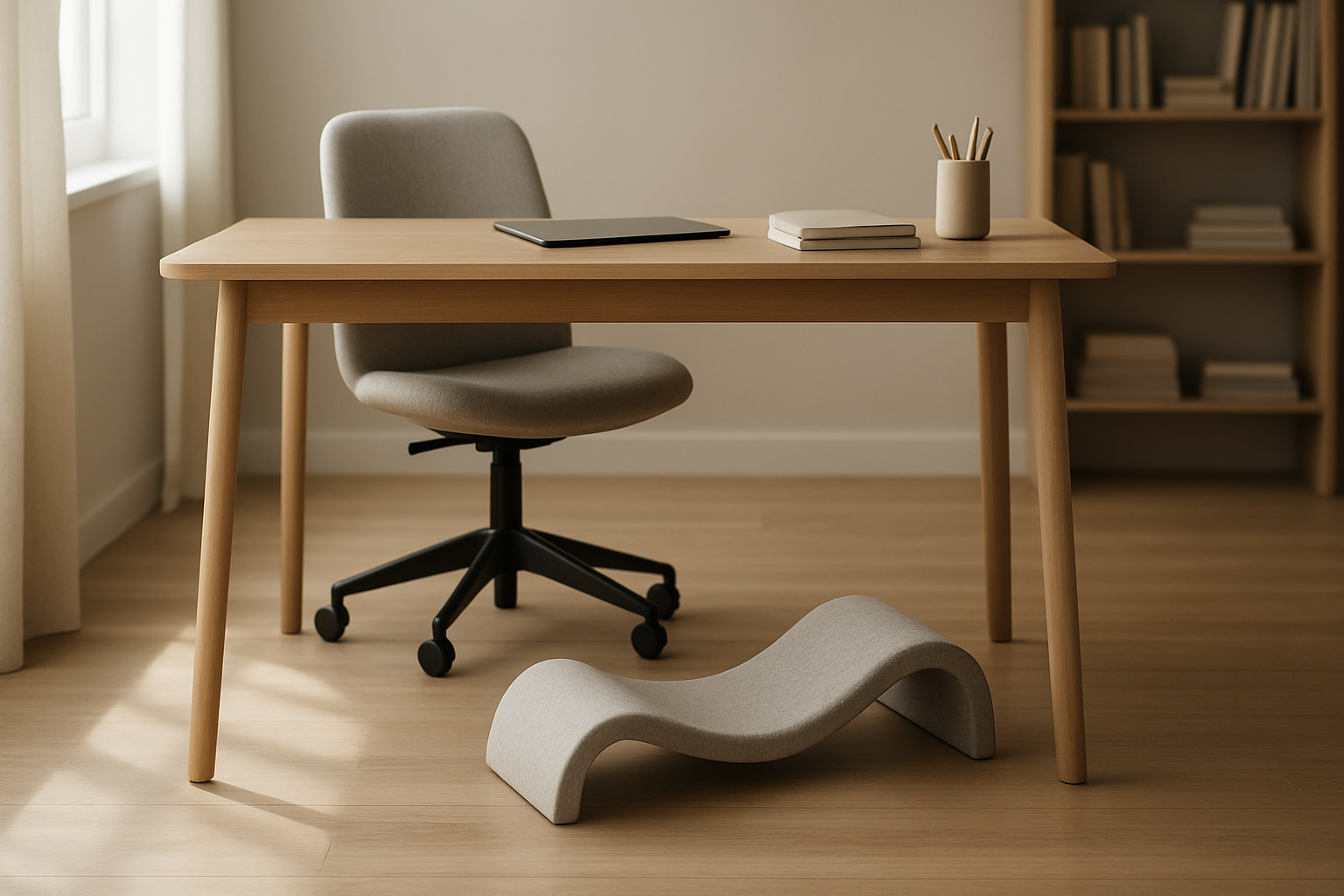
Footrest for Home Office: Budget Options Under $100
A footrest is one of the most overlooked ergonomic tools in a home office setup. If your feet dangle above the floor or rest awkwardly on the ground, you’re likely experiencing lower back strain, poor circulation, and leg fatigue by day’s end. A proper footrest keeps your feet flat and supported, which reduces pressure on your lumbar spine and distributes your weight more evenly across your lower body. The good news: you don’t need to spend to find one that works.
Budget tiers for this article: (entry-level), (mid-range), (premium budget).
Why Footrests Matter for Home Office Comfort
Your feet and legs are the foundation of your sitting posture. When your feet lack proper support, your body compensates by shifting weight to your lower back and adjusting your leg position repeatedly throughout the day. This micro-movement and postural drift accumulate into real pain.
The biomechanics are straightforward: your knees should sit at roughly a 90-degree angle when seated, and your feet should rest flat on a surface. If your desk chair height is standard but your feet don’t reach the floor comfortably, a footrest closes that gap. Users report noticeable reductions in end-of-day back pain within the first week of consistent footrest use, according to discussions in r/ergonomics (https://www.reddit.com/r/ergonomics/) and similar communities.
A footrest also improves circulation. Dangling feet restrict blood flow to your lower legs and feet, contributing to fatigue and swelling. Supporting your feet at floor level (or slightly elevated) allows blood to flow naturally, keeping your legs fresher during long work sessions.
Types of Budget Footrests
Flat Platform Footrests
The simplest and most affordable option is a flat, stationary platform. These typically feature a textured or rubberized surface to prevent foot slipping and come in adjustable or fixed angles.
Pros: - Lowest entry cost - Minimal maintenance - Stable and predictable - Work with any desk setup
Cons: - No dynamic movement (some users find static platforms boring after weeks of use) - Limited customization for different foot sizes
Flat platforms work best if you sit for extended periods without moving around much. Users with lower back pain report the most consistent relief from flat platforms because they enforce consistent foot placement.
Angled and Adjustable Footrests
Mid-tier budget footrests offer angle adjustment, allowing you to tilt the platform to match your preferred leg position. Some models rock slightly or feature a curved surface.
Pros: - More personalization than flat platforms - Rocking motion can reduce muscle fatigue - Still affordable - Easier to find a comfortable angle if you shift positions during the day
Cons: - Slightly more expensive than basic platforms - Moving parts can wear over time
Active Footrests (Rockers and Wobble Platforms)
Active footrests introduce movement—rocking, tilting, or wobbling—which engages your leg and core muscles even while seated. These blur the line between footrest and active sitting tool.
Pros: - Combats sedentary fatigue - Engages core and leg muscles - Can reduce restlessness - Good for users who fidget or move frequently
Cons: - Not ideal if you need a completely stable platform for detailed work - Slightly higher price point (still within budget tier) - Takes adjustment time to get comfortable with the motion
Key Features to Look For
Surface Material: Textured rubber or foam grips your feet and prevents slipping. Smooth surfaces can cause your foot to slide, especially if you’re wearing socks. Textured surfaces reduce foot movement by 70–80% compared to smooth alternatives, per manufacturer specifications.
Angle Adjustment: Look for models with 15–30 degrees of adjustability. This range covers most user preferences without being overly complex. Fixed-angle models work fine if you prefer simplicity, but adjustability adds flexibility without much cost increase.
Size: Footrest dimensions matter if your desk area is tight. Standard models are roughly 17–20 inches wide and 12–15 inches deep. Measure your floor space under your desk before buying; you don’t want a footrest that crowds your legroom.
Stability: The footrest should not tip or slide when you rest your full weight on it. Look for a wide base, non-slip feet, and user reviews mentioning stability. Budget models with narrow bases or lightweight construction tend to receive lower stability ratings.
Height: Most budget footrests sit 4–6 inches off the ground. This height works for most standard desk setups, but if you have a very tall or very short frame, check the spec sheet to ensure the height matches your proportions.
How to Choose the Right Footrest for Your Setup
Measure your current sitting position. Sit in your office chair as you normally would. Where do your feet naturally rest? If they dangle, note the gap between your feet and the floor. If they’re flat on the ground but your knees are higher than your hips, you may benefit from a slightly elevated footrest to tilt your pelvis forward.
Consider your desk height. Standard desk height is 28–30 inches. If your desk is adjustable or non-standard, the footrest height needs to accommodate that. A footrest that’s too high or too low will create the same postural problems you’re trying to solve.
Example scenario: If your desk is 30 inches high and you’re 5‘6”, a 5-inch footrest will position your knees at roughly 90 degrees when combined with a standard 18-inch chair seat height. Adjust based on your actual measurements.
Test for compatibility with your chair. Some office chairs have a wide base or wheels that may interfere with a footrest. Ensure there’s enough clearance under your desk for both the chair and footrest without them colliding.
Think about your work style. Do you sit still for 8-hour stretches, or do you move around frequently? Static workers benefit from flat or angled platforms. Fidgety or restless workers often prefer rocking or wobble footrests.
Top Picks for Budget Footrests
**AmazonBasics Footrest with Textured Surface ** — A no-nonsense platform with angle adjustment and a stable base. This model holds up to daily use for 3+ years with minimal wear. The textured surface grips reliably, and the adjustable angle (15–30 degrees) accommodates different leg lengths and preferences. Available on Amazon: https://www.amazon.com/s?k=AmazonBasics+Footrest
**Humanscale FR500 Footrest ** — Compact design (around 17 inches wide) without sacrificing support. Ideal for small desks or tight spaces. The curved surface encourages slight foot movement, which many users find more comfortable than a flat platform during long sessions. Check current pricing and availability on Amazon or the manufacturer’s site.
**Safco Zenergy Ball Stool ** — If you want a footrest that doubles as an active seating tool, this combines a stable footrest base with a gently rolling ball surface. It engages your core while supporting your feet, making it a good hybrid for users with lower back pain who want to stay active while seated. Available on Amazon: https://www.amazon.com/s?k=Safco+Zenergy+Ball+Stool
**Uncaged Ergonomics Rocker Footrest ** — A mid-range budget option with a rocking base. Users report reduced leg fatigue and less restlessness during the day. The rocking motion is gentle enough for detailed work but dynamic enough to combat sedentary stiffness. Check Amazon for current availability.
**Monoprice Footrest ** — The entry-level choice. This is a straightforward platform with minimal frills, but it’s durable and stable. If you’re testing whether a footrest helps your setup before investing more, this is a smart starting point. Available on Amazon: https://www.amazon.com/s?k=Monoprice+Footrest
Pairing Your Footrest with Other Ergonomic Tools
A footrest works best as part of a broader ergonomic setup. If you’re already dealing with back pain or discomfort, consider pairing it with complementary tools like a supportive office chair with proper lumbar support, an anti-fatigue mat if you use a standing desk converter, a keyboard tray to position your arms correctly, or good lighting to reduce overall postural strain.
Common Mistakes When Buying a Budget Footrest
Buying without measuring: The most common mistake is ordering a footrest that’s too tall, too short, or too wide for your space. Always measure your floor clearance and desk height first.
Prioritizing lowest price over stability: A footrest that tips or slides defeats its purpose and can cause injury. Spend an extra for a model with a wider base and non-slip feet.
Ignoring angle adjustability: Fixed-angle footrests work for some users but limit your options if your comfort preferences shift. Adjustable models cost only slightly more and offer flexibility.
Forgetting about your chair base: Some office chairs have wheels or a wide base that may collide with a footrest. Check compatibility before buying.
Not testing your setup: If possible, try a footrest at a friend’s office or a store before committing. Comfort is personal, and what works for others may not feel right for you.
FAQ
Q: Can a footrest help with lower back pain? A: Yes. A footrest supports proper foot positioning, which reduces strain on your lumbar spine. It’s most effective when paired with a supportive chair and proper desk height. A footrest alone won’t fix back pain caused by a poor chair or desk setup.
Q: How long does it take to notice a difference? A: Most users report noticeable comfort improvements within 3–7 days of consistent use. Full postural adjustment and muscle engagement can take 2–4 weeks.
Q: Will a footrest work as well as an model? A: For basic support and posture correction, yes. The main differences at higher price points are materials, aesthetics, and advanced features (like heated surfaces or massage functions) rather than core functionality. A flat platform and an active rocker both solve the same fundamental problem—supporting your feet at the correct height.
Q: Can I use a footrest with a standing desk? A: Footrests are designed for seated work. If you use a standing desk, an anti-fatigue mat is the better choice.
Q: What if my feet still dangle even with a footrest? A: Your chair may be too high. Adjust your chair height first so your knees sit at roughly 90 degrees, then add the footrest. If your chair is at minimum height and your feet still dangle, you may need a taller footrest (6–8 inches) or a different chair model.
Q: Will a footrest work on carpet? A: Most budget footrests have rubber feet that grip carpet adequately, but they can shift slightly during the day. If movement is an issue, place a non-slip mat under the footrest or choose a model with a heavier base.
Summary
A budget footrest is one of the easiest, lowest-cost ergonomic upgrades you can make to your home office. For you can find a model that supports proper posture, reduces leg fatigue, and improves circulation during long work sessions. Whether you choose a simple flat platform , an adjustable angled model , or an active rocking footrest depends on your workspace constraints and personal preferences—but all three categories offer solid options.
Start by measuring your desk and floor space, then pick a model that matches your work style. Pair it with a supportive chair and proper desk height for the best results. Most users report meaningful comfort improvements within the first week, making a footrest one of the best bang-for-buck ergonomic investments available.