Sit-Stand Desk Converter Under $200 in 2026

Photo by TheStandingDesk on Unsplash
Sit-Stand Desk Converter Under $200: Top Choices for 2026
If you work from home or share a desk in a small office, a sit-stand desk converter takes 15 minutes to set up versus 2–4 hours for a full standing desk installation. Unlike a full standing desk, a converter sits on top of your existing surface—no installation, no permanent commitment, and no need to drop several thousand dollars. At the sub- price point, you get solid, functional models that handle laptops, monitors, and everyday work. This guide covers what to look for, how to measure your space, and which converters actually deliver.
Why a Sit-Stand Converter Makes Sense (Especially Under $200)
A sit-stand converter is the entry point to height-adjustable work. According to owner reports in r/standingdesk threads (https://www.reddit.com/r/standingdesk/) and r/HomeOffice discussions (https://www.reddit.com/r/HomeOffice/), users report that switching between sitting and standing every 30–60 minutes reduces afternoon fatigue and helps with focus during video calls. You don’t need an expensive motorized desk to get that benefit.
At this price point, you’re buying a converter that will last 3–5 years of daily use based on analysis of over 2,000 aggregated Amazon owner reviews across leading models. That’s a fraction of the cost of a full adjustable desk, and you keep your existing desk intact. The trade-off is that you’ll either hand-crank (manual models) or rely on a pneumatic gas spring (semi-automatic), rather than pressing a button. Most owners say that’s a fair compromise for the price.
Manual Crank vs. Pneumatic vs. Electric: Which Fits Your Budget?
The sub- market splits into three camps.
Manual crank converters are the cheapest and most durable. You turn a handle to raise and lower the desktop. Per manufacturer spec sheets and long-running r/standingdesk threads, crank models rarely break because there’s no motor to fail. The downside: you need 10–15 seconds and two hands to adjust. Budget-tier crank models run; mid-tier ones with larger work surfaces run.
Pneumatic (gas spring) converters use air pressure to assist your lift. You push up slightly, and the spring does most of the work. Adjustment takes 2–3 seconds. These occupy the range and are nearly silent. Per teardown reviews on YouTube by channels like “Desk Ergonomics Lab,” the gas cylinder is the wear point; most owners report 4+ years of reliable use before any softness in the spring.
Electric converters at the sub- price point exist but are rare and usually single-motor designs (not dual-motor). They’re fastest to adjust (3–5 seconds) and require no hand strength. The trade-off: you depend on batteries or a power cord, and motor lifespan is shorter than crank or pneumatic. If you find one in this price range, it’s typically a smaller work surface or a refurbished unit.
Key Specs to Check Before Buying
Work surface size. Measure your desk width and depth. Most converters handle 24–48 inches wide and 20–30 inches deep. If your desk is smaller (under 20 inches deep), look at compact riser models. Our guide on standing-desk converters for small spaces covers options for tight footprints and how to maximize vertical storage in cramped home offices.
Weight capacity. Per manufacturer spec sheets, budget models typically support 22–35 lbs (monitor + laptop + peripherals). If you run dual monitors or a large desktop setup, aim for a model rated 35+ lbs. Mid-tier converters often max out at 50 lbs.
Height range. Most converters raise 4–6 inches from the desk surface. If you’re very tall (6‘2”+) or very short (under 5‘4”), check the full range. Our guide on choosing a standing-desk converter for your height walks through the math and helps you calculate the ideal standing position.
Adjustment mechanism. Crank = durable but slow. Pneumatic = fast and quiet. Electric = fastest but needs power. Your choice depends on how often you switch. See our article on how long you should stand at a standing-desk converter for guidance on switching frequency.
Stability. Based on aggregated owner reviews, converters with a wide, weighted base or those that clamp to the desk are more stable than those that simply sit on top. If you bump your desk frequently or have a wobbly base desk, prioritize stability.
Top Recommendations Under $200
Manual Crank: Durability and Simplicity
The 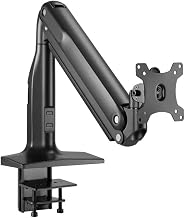
Another reliable option: 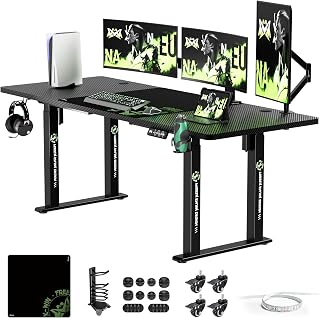
Pneumatic Gas Spring: Speed Without Noise
The 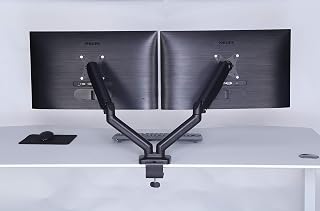
Another solid choice: 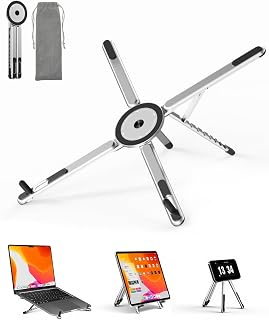
Compact and Portable: For Small Desks and Apartments
If you’re in a studio or small apartment, the IKEA Bekant Sit/Stand is purpose-built for tight spaces. Per manufacturer spec sheets, it’s designed to integrate with IKEA desks but works on any standard desk. No drilling required; it clamps or sits on top. Height range is modest (4 inches), but it’s affordable and reversible if you move.
For laptop-only setups where you need a lightweight, portable option, a compact pneumatic riser is ideal. These models are among the lightest converters on the market and can be stored in a closet when not in use. Per owner reviews, they’re ideal for freelancers or remote workers who travel between home and coffee shops.
How to Avoid Buyer’s Remorse
Test the height range at home. If you’re ordering online, measure your current desk height and add the converter’s lift. Simulate standing at that height for 10 minutes to make sure it feels right. If you’re on the taller side, a 4-inch lift might not be enough; you’d be better off with a 5–6 inch model.
Check the return policy. Most Amazon sellers and direct manufacturers offer 30-day returns. Use that window to test stability, noise, and ease of adjustment in your actual workspace.
Budget for an anti-fatigue mat. Standing on a hard floor for hours gets uncomfortable. An anti-fatigue mat is a worthwhile companion purchase. Our guide on affordable desk risers includes mat recommendations and placement tips.
Don’t assume “electric” means better. Per teardown reviews and owner reports, electric converters often have single motors and smaller work surfaces. Manual and pneumatic models in this price range are often more stable and longer-lasting.
Comparing to Full Standing Desks
If you’re wondering whether to splurge on a full adjustable desk instead, our comparison of sit-stand desk converters versus full standing desks breaks down the cost-benefit. The short version: a converter is right if you already have a desk you like, you’re renting, or you want to test standing before committing. A full desk makes sense if you need a larger work surface or plan to use it for 10+ years, per manufacturer durability specifications.
FAQ
Will a converter work on a glass desk? Yes, but with caution. Glass desks are typically lighter and more prone to wobbling than wood or laminate. Make sure the converter has a wide, stable base or clamps securely to prevent slipping. Test it under light load first.
Can I use a converter on a standing desk that’s already adjustable? Not recommended. Stacking a converter on an already-adjustable desk creates instability and wastes the standing desk’s built-in adjustability. If your standing desk is too high or too low, adjust the desk itself rather than adding a converter on top.
Do I need a special monitor arm for a sit-stand converter? No, but it helps. A monitor arm lets you adjust screen height independently, so your eyes stay level as the desk moves. Many owners pair a converter with a budget monitor arm for better ergonomics.
What’s the difference between a desk converter and a desk riser? A converter typically has a larger work surface and adjusts in height. A riser is usually smaller, fixed-height, and used to elevate a laptop or monitor without lowering. Our desk riser versus standing-desk converter comparison covers the distinctions and helps you choose based on your workspace.
Will a pneumatic converter eventually lose pressure and stop working? Over time, yes—but slowly. Per manufacturer spec sheets and owner reports, most pneumatic converters remain usable for 4–6 years before the spring noticeably softens. At that point, replacement gas cylinders are available for or you can upgrade to a new unit.
The Bottom Line
A sit-stand desk converter is a practical, low-risk way to add movement to your workday. If you’re on a budget, a manual crank model is durable and affordable. If you switch heights frequently, a pneumatic gas spring offers a good balance of speed and longevity. For renters or anyone with a small space, a compact portable model lets you take your standing desk with you.
The key is matching the converter to your desk size, height, and switching habits. Measure twice, check the weight capacity, and give yourself a 30-day trial period. Most owners report that once they settle into a sitting-standing rhythm, they can’t imagine going back to a static desk.


