Affordable Anti-Fatigue Mats Under $75

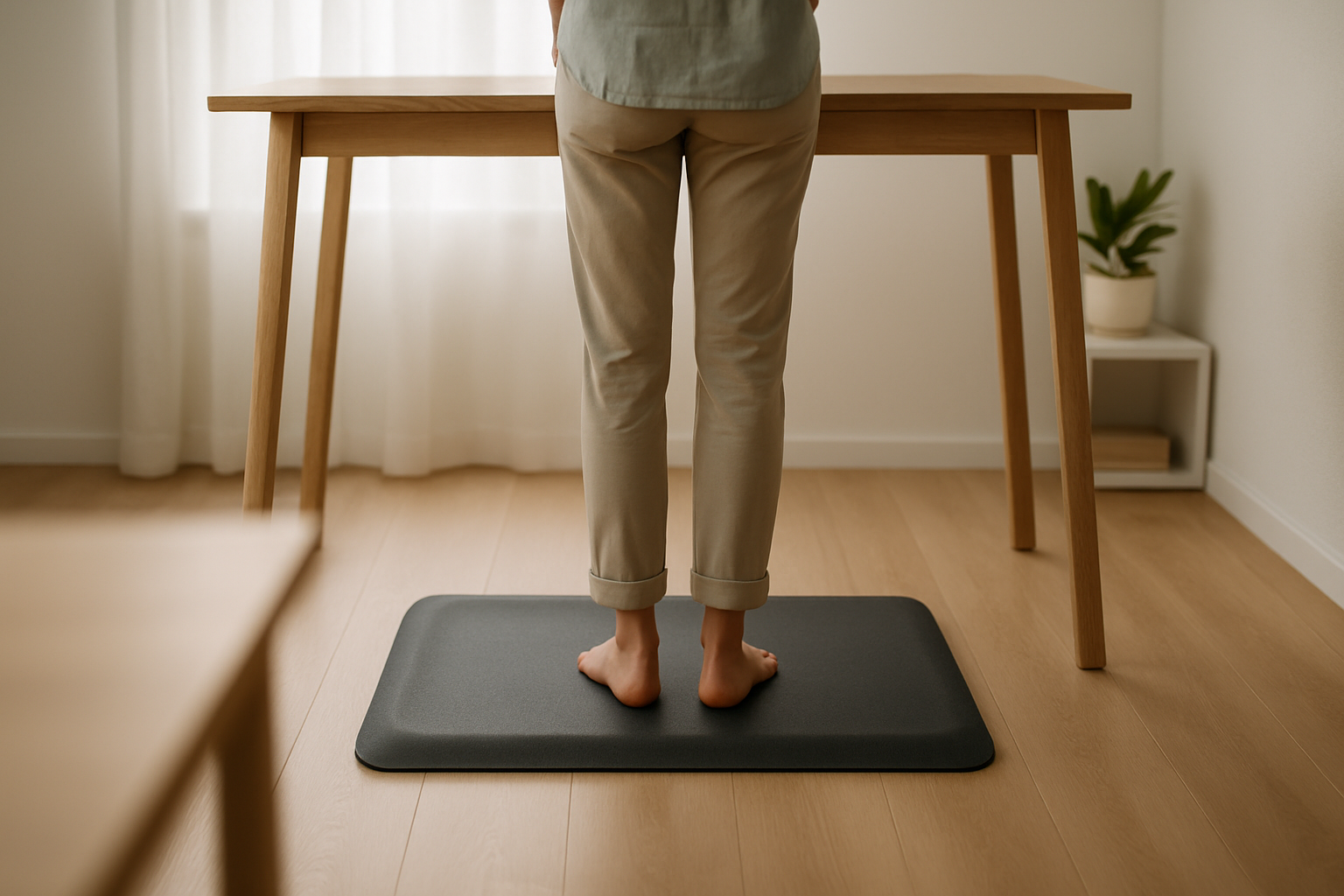
Photo by Tim Mossholder on Unsplash
Affordable Anti-Fatigue Mats Under $75
You don’t need to spend a fortune to get real relief from standing fatigue. A quality anti-fatigue mat in the price range delivers genuine ergonomic benefit—reduced foot pain, lower back strain, and better circulation—without the premium-tier markup. This guide covers the budget options that actually work, how to pick the right one for your space, and what to avoid when shopping this category.
What Makes a Budget Anti-Fatigue Mat Worth Buying
The core job of any anti-fatigue mat is straightforward: cushion your feet and encourage subtle micro-movements that keep blood flowing during prolonged standing. Budget mats accomplish this through foam, rubber, or gel-infused blends rather than premium materials like memory foam or specialized gel cores.
Cushioning depth matters. Most mats in this price range offer 0.75 to 1.25 inches of compression. Thinner mats (under 0.75 inches) feel firm and provide minimal shock absorption; thicker mats (1.25+ inches) offer more give but can feel unstable if you have balance concerns. The sweet spot for standing desk work is 0.9 to 1.1 inches—enough to soften impact without making you feel like you’re standing on a pillow.
Surface texture affects grip and feel. Smooth surfaces are easy to clean but can feel slippery in socks. Textured or contoured surfaces (like beveled edges or massage nubs) provide grip and encourage foot movement, which is the whole point.
Durability in this price tier typically means 2–4 years of daily use before visible compression or edge curling appears. Budget mats don’t last as long as premium-tier options (which can push 5–7 years), but they’re replaced at a fraction of the cost.
Top Budget Anti-Fatigue Mat Picks
Memory Foam & Contoured Options
The Topo stands out because it mimics the contoured design of premium mats at a mid-tier price. The surface features subtle peaks and valleys that encourage foot repositioning throughout the day. The mat uses high-density memory foam with a non-slip rubber base. Owner reviews consistently report reduced arch pain and lower back tension after 1–2 weeks of daily use. The mat is lighter than solid-foam alternatives, making it suitable for renters or frequent rearrangement. Fair warning: the textured surface is harder to clean than flat mats, and some owners report a mild chemical smell for the first few days out of the box.
Durable Gel & Rubber Blends
This mat combines a dense rubber base with a gel-infused top layer, designed to handle high-traffic standing (kitchens, retail, standing desks). It holds up well to 8+ hour daily standing without noticeable compression after 2–3 years. The surface has a subtle texture that resists slipping, and the overall construction feels stable underfoot. It’s heavier than foam alternatives, so it’s best for permanent or semi-permanent placement. The Nantucket colorway is neutral and hides wear better than lighter shades.
Lightweight & Portable Options
Kangaroo Original Standing Mat
Kangaroo mats are the go-to choice for renters and people who move frequently. The mat rolls up compactly and weighs significantly less than rubber-core alternatives. It provides adequate cushioning for 4–6 hour standing sessions and is durable enough for occasional daily use. The foam construction is straightforward—no gel, no fancy contours—but the simplicity keeps the price low and reliability high. Many owners report using these in home offices, kitchens, and even workshops without issue.
No-Frills Budget Tier
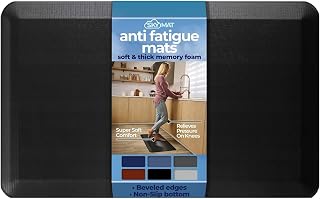
If you’re testing whether an anti-fatigue mat works for you before investing more, Sky Solutions delivers basic comfort at the lowest price point in this roundup. The mat is a solid foam construction with a textured top and non-slip rubber base. It’s suitable for 4–5 hour standing days and lasts 2–3 years with normal use. Don’t expect the ergonomic refinement of contoured designs, but for someone standing at a kitchen counter or occasional standing desk work, it’s a legitimate entry point.
For Hard or Cold Floors
Wellness by Design Anti-Fatigue Mat
Thicker than most budget alternatives (1.25+ inches), this mat excels on concrete, tile, or other hard flooring. The extra cushioning absorbs impact more aggressively and traps warmth, which is valuable if you’re standing in a garage, basement, or unheated workshop. Per owner reports, the thickness can feel slightly unstable for people with balance concerns, but most users adjust within a few days. The mat is durable and holds compression well over 2–3 years.
How to Choose the Right Mat for Your Space
For standing desks: Look for mats in the 0.9–1.1 inch range with a textured surface. Contoured designs (like the Topo) encourage the micro-movements that reduce fatigue during 6+ hour workdays. See Anti-Fatigue Mat Size Guide for Standing Desks for dimension guidance.
For kitchens or retail-style standing: Prioritize durability and easy cleanup. Rubber-core mats (like the Imprint) handle spills better than foam and resist compression from repeated foot traffic. A mat at least 2 feet wide gives your feet room to shift.
For renters or temporary setups: Choose lightweight, rollable mats that don’t require permanent placement. Kangaroo-style mats leave no residue and fit in a closet.
For concrete or tile floors: Thicker mats (1.2+ inches) absorb more shock and provide warmth. Budget options like Wellness by Design sacrifice some portability for comfort on hard surfaces.
For small spaces: A narrower mat (18–24 inches wide) fits tighter desk setups. Don’t go narrower than 18 inches—your feet need room to shift, and cramped mats actually increase fatigue.
Common Mistakes When Buying in This Price Range
Choosing purely on price. The cheapest mat on Amazon isn’t always the worst value, but mats often compress within 6–12 months. This price tier includes proven mid-range options that hold up for years.
Ignoring surface texture. A smooth, flat mat feels cheaper underfoot and offers no grip in socks. Textured surfaces cost slightly more but correlate with higher satisfaction and longer usable life.
Underestimating thickness. A 0.5-inch mat feels thin and provides minimal shock absorption. Aim for at least 0.75 inches; anything under that is more of a floor protector than a fatigue mat.
Forgetting about placement. A mat that curls at the edges becomes a tripping hazard and loses effectiveness. Ensure your floor is clean and dry before placing the mat, and check reviews for edge-curl complaints in your climate (humidity can trigger this).
Buying the wrong size. A mat that’s too small forces your feet into a confined area, which increases fatigue rather than reducing it. Most standing desk users benefit from mats at least 20 inches wide and 30+ inches long.
Do Budget Mats Actually Work?
Yes—with caveats. Per discussions on r/StandingDesk and r/Ergonomics, budget anti-fatigue mats deliver measurable relief for foot pain, lower back tension, and circulation during standing work. Most users report noticeable improvement within 1–2 weeks of daily use.
However, a mat is not a substitute for proper posture, a well-adjusted standing desk, or movement breaks. Budget mats also compress faster than premium alternatives, so you may need to replace yours every 2–3 years rather than 5+.
The ROI is strong: a mat in this price range per year—far less than the cost of chronic foot or back pain.
Storage and Maintenance
Budget mats are easier to maintain than you’d think. Wipe spills immediately with a damp cloth. Vacuum or sweep weekly to prevent grit from embedding in textured surfaces. Most mats dry completely within 2–4 hours if wet.
For long-term storage (if you’re moving or taking a break), roll the mat loosely and store it in a cool, dry place. Tight rolling can cause permanent creases; loose rolling allows the foam or rubber to relax.
FAQ
Q: Can I use a budget anti-fatigue mat on carpet? A: Yes, but it’s less effective. Carpet already provides cushioning, so a mat on top can feel unstable. Budget mats work best on hard flooring (tile, concrete, laminate, hardwood). If you must use one on carpet, choose a heavier rubber-core mat for stability.
Q: Can I return a mat if it doesn’t help my pain? A: Most retailers (Amazon, Wayfair, direct manufacturers) offer 30–60 day return windows. Check the product listing before purchasing. Some brands like Kangaroo and Ergodriven offer extended trial periods (up to 90 days), so review the return policy for your specific mat.
Q: Do mats work on uneven floors? A: Uneven floors reduce mat effectiveness because gaps between the mat and floor create unstable spots. If your floor is significantly uneven, address the floor first (self-leveling compound, shims) or choose a thicker, more rigid mat like the Imprint CumulusPro, which bridges small gaps better than thin foam mats.
Q: Do I need a mat if I have a standing desk converter? A: A mat and a converter serve different purposes. The converter lets you alternate positions; the mat reduces fatigue while standing. Using both is ideal for comfort, but a mat alone improves standing fatigue significantly.
Q: Will a mat help if I have flat feet or high arches? A: A mat reduces overall foot fatigue for most people, but it’s not a substitute for arch support insoles if you have significant structural issues. Contoured mats (like the Topo) offer more foot support than flat mats. If you have chronic foot pain, consult a podiatrist alongside using a mat.
Q: Can I use the same mat for standing desk work and kitchen standing? A: Yes. A versatile mat (like the Imprint or Kangaroo) works in both contexts. Just ensure it’s durable enough for kitchen spills and traffic, and that it fits your desk footprint.
Final Verdict
A quality anti-fatigue mat in the range is one of the highest-ROI ergonomic upgrades for standing work. You’re not sacrificing durability or comfort—you’re avoiding the premium-tier markup. The mats in this guide have proven track records and deliver genuine relief from standing fatigue within weeks.
Start with a mat that matches your use case (standing desk, kitchen, or portable) and your floor type (hard or carpet). Pair it with proper posture, movement breaks, and ideally a sit-stand converter for maximum benefit. Replace it every 2–3 years and you’ll have a sustainable, affordable standing solution that actually works.