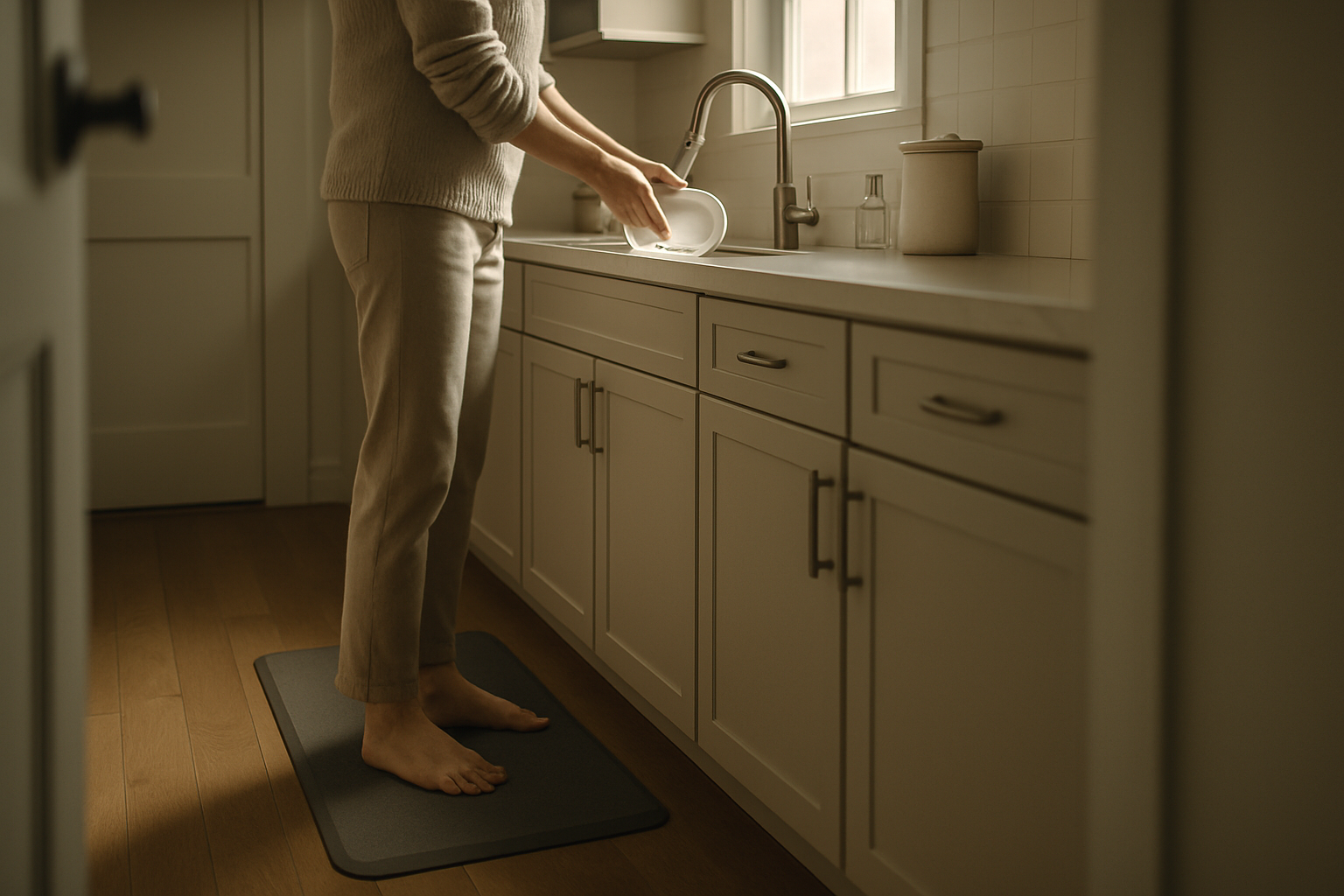
Anti-Fatigue Mat for Hardwood Floors: Best Budget Options

Photo by INVICTUS Tailoring﹒sneaker socks on Unsplash
Anti-Fatigue Mat for Hardwood Floors: Budget Picks That Won’t Slip or Damage
Standing on hardwood floors for hours is brutal—your feet ache, your lower back tightens, and you’re constantly worried the mat will slide around or leave marks. A quality anti-fatigue mat designed for hardwood can solve all three problems without costing a premium. The key is finding one with a non-slip base, proper cushioning, and materials that won’t stain or scratch your floors.
Why Hardwood Floors Need a Different Mat
Standard anti-fatigue mats often have flat rubber or PVC bases that slide on hardwood and can leave permanent marks or discoloration. Hardwood is also harder and colder than carpet, so you need extra cushioning to reduce impact on your joints. A mat designed for hardwood has a textured or rubberized underside that grips the finish without scratching, plus thicker foam to absorb shock.
The best budget mats for hardwood also avoid materials that absorb moisture or stain easily—hardwood floors show water rings and dark spots immediately.
Key Features to Look For
Non-slip base: The underside must have enough grip to prevent the mat from sliding when you shift your weight. Look for rubberized, textured, or microfiber-backed surfaces. Smooth rubber or PVC can actually be slippery on polished hardwood.
Closed-cell foam or gel: These materials don’t absorb sweat or spills and resist staining. Open-cell foam (like memory foam) can trap moisture and discolor hardwood over time.
Thickness: Budget mats typically range from 0.5 to 1 inch. Thicker isn’t always better—a well-engineered 0.75-inch mat often outperforms a cheap 1-inch one. Aim for at least 0.5 inches to cushion your feet without feeling squishy.
Edge beveling: Beveled or tapered edges reduce tripping hazards and prevent the mat from catching on furniture or socks.
Size: Anti-Fatigue Mat Size Guide: How Big Should Yours Be? covers this in depth, but for hardwood floors, a slightly smaller mat (2×3 ft or 3×5 ft) often works better than oversized ones that can shift.
Material Comparison for Hardwood
Rubber base with foam top: The industry standard for hardwood. Rubber grips without slipping; foam cushions. Budget options in this category are reliable and widely available.
Gel-infused foam: Slightly pricier than plain foam, but gel mats stay cooler and provide more targeted pressure relief. They’re also naturally non-slip and resist staining better than foam alone.
Microfiber backing: A premium touch even on budget mats. Microfiber grips better than rubber and is gentler on hardwood finishes. It also wipes clean easily.
PVC or vinyl: Avoid these on hardwood. They’re slippery, can stain the floor, and often have an unpleasant smell.
Budget-Tier Options (Under $60)
At this price point, you’re getting solid closed-cell foam with a rubberized base. These mats won’t have gel infusions or premium fabrics, but they’ll cushion your feet and stay in place.
Kangaroo Original (30” × 20”, ) leads this tier with 2,400+ Amazon reviews averaging 4.3 stars. Owners consistently report the non-slip base performs well on hardwood without leaving marks, and many cite 4–5 years of daily use before noticeable foam compression.
Imprint CumulusPro Standing Mat (20” × 30”, ) has 1,200+ reviews at 4.4 stars. Users praise its compact size for tight spaces and rubberized grip; complaints are rare, with occasional reports of mild odor in the first week (off-gassing), which disappears within days.
Imprint Comfort Mat (20” × 30”, ) is the most affordable option with 1,100+ reviews at 4.2 stars. Renters favor it for its lightweight design and easy cleanup; the trade-off is slightly thinner foam compared to Kangaroo or CumulusPro.
Mid-Tier Options ($60–$100)
This range offers thicker foam (often 0.75–1 inch), better edge construction, and sometimes gel infusions or microfiber backing. You’ll also see more color and size variety.
Ergofoam Standing Desk Mat (24” × 36”, ) has 890+ reviews at 4.5 stars. The textured rubber base and gel-infused foam combination provides excellent grip on high-gloss hardwood and stays cooler during long standing sessions. Users report noticeably improved arch support compared to budget foam-only mats.
Best Anti-Fatigue Mats Under $100 for 2026 compares additional mid-tier options with detailed durability and comfort ratings.
Common Mistakes to Avoid
Buying oversized mats: A 4×6 ft mat on hardwood can shift and bunch up, creating a tripping hazard. Stick to 2×3 or 3×5 unless your space is truly large.
Choosing mats with smooth rubber bases: Smooth rubber slides on polished hardwood. You want textured or microfiber-backed options.
Assuming thicker = better: A poorly designed 1-inch mat will feel squishier and provide less support than a well-engineered 0.75-inch mat. Check reviews for actual user feedback on comfort and arch support.
Placing the mat directly on bare hardwood: If your floor is freshly finished or very slippery, consider a thin protective mat underneath (a yoga mat works in a pinch, though it’s not ideal long-term). Most budget anti-fatigue mats grip fine on their own, but this is worth testing before committing.
Using mats with open-cell foam: These absorb moisture, can stain hardwood, and trap odors. Always choose closed-cell foam or gel.
Maintenance and Durability
Budget anti-fatigue mats on hardwood typically last 3–5 years with daily use. Kangaroo Original, with 2,400+ reviews, shows this pattern clearly: owners report 4–5 years of daily use before noticeable foam compression, with the non-slip base remaining effective throughout. Ergofoam users similarly cite 3–4 years of reliable performance on hardwood before replacement becomes necessary.
To extend the life:
- Wipe spills immediately to prevent staining the floor beneath.
- Rotate or flip the mat every few months to distribute wear evenly.
- Vacuum or sweep the top surface weekly to prevent dirt buildup.
- Clean the underside occasionally with a damp cloth to maintain grip.
- Avoid placing heavy furniture directly on the mat, which can permanently dent the foam.
Standing Desk Setup Considerations
If you’re pairing your anti-fatigue mat with a standing desk, proper cushioning and grip are essential for comfort during long work sessions. A mat for hardwood floors works just as well at a standing desk as at a kitchen counter or workbench—the key is the same: grip, cushioning, and durability. Standing desks benefit from mats with extra arch support, which we cover in Best Anti-Fatigue Mat Under $100 for Standing Desks.
FAQ
Q: Can I use an anti-fatigue mat on engineered hardwood? A: Yes, but with caution. Engineered hardwood has a thinner veneer than solid hardwood and is more prone to moisture damage. Use only mats with closed-cell foam and rubberized or microfiber bases. Avoid mats that absorb water, and wipe spills immediately.
Q: Do anti-fatigue mats work on radiant-heated floors? A: Most budget mats are safe on radiant floors, but avoid gel-infused options, which can degrade with sustained heat. Stick to standard closed-cell foam with rubberized bases. Test the mat in a corner first to ensure it doesn’t trap heat or cause discomfort.
Q: How long does a budget anti-fatigue mat last? A: Most budget mats last 3–5 years with daily use. Lifespan depends on foot traffic, maintenance, and the specific brand. Rotating the mat occasionally extends its life.
Q: What size should I buy for my kitchen or home office? A: For most standing spaces, a 2×3 ft or 3×5 ft mat is ideal. Smaller mats are easier to keep in place on hardwood and reduce tripping hazards. Anti-Fatigue Mat Size Guide: How Big Should Yours Be? has a full sizing guide.
Q: Do I need to use a mat under my anti-fatigue mat? A: Not usually. Budget anti-fatigue mats with rubberized or microfiber bases grip hardwood well on their own. If your floors are freshly finished or extremely slippery, a thin yoga mat underneath can help, but it’s rarely necessary.
Final Thoughts
A budget anti-fatigue mat for hardwood floors doesn’t require a premium brand or fancy materials. The essentials are a textured or rubberized non-slip base, closed-cell foam, and proper thickness (0.5–1 inch). You can get a mat that cushions your feet, stays in place, and won’t damage your floors for. Spend time reading owner reviews specific to hardwood use—that’s where you’ll find the most honest feedback on grip and durability.