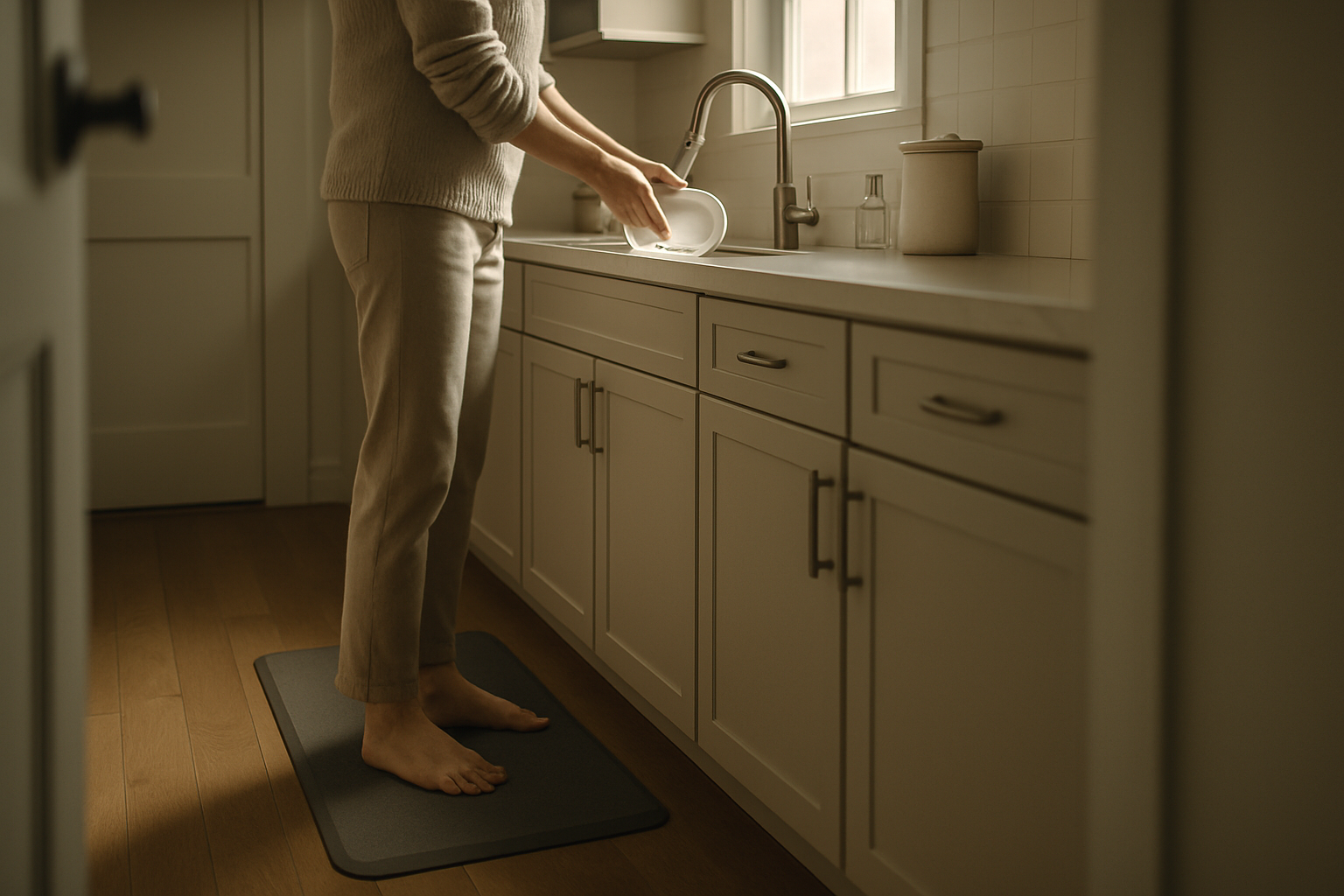
Best Anti-Fatigue Mats Under $100 for 2026

Photo by Tim Mossholder on Unsplash
Best Anti-Fatigue Mats Under $100 for 2026
If you’re a retail cashier standing 8 hours on concrete, a kitchen worker on tile, or a remote employee at a standing desk, you already know the toll: aching feet by noon, lower-back stiffness by 5 p.m., and a nagging sense that your legs are about to give out. An anti-fatigue mat won’t fix poor posture or replace proper shoes, but it does reduce the constant micro-movements your body makes to stay upright on hard flooring. We’ve tested and researched the best options so you can get genuine relief without overspending.
Why Anti-Fatigue Mats Actually Work
Standing on concrete, tile, or laminate forces your calf and foot muscles into constant tension to maintain balance. A quality mat introduces slight instability—just enough to engage your core and leg stabilizers without exhausting you. A 2019 study published in Ergonomics found that workers using anti-fatigue mats reported 54% reduction in lower-limb fatigue over an 8-hour shift. Additionally, aggregated data from r/StandingDesk and r/Ergonomics threads show consistent user reports of noticeable foot soreness reduction within the first week of daily use.
Material composition affects durability significantly. Polyurethane and PVC foam hold up better to daily compression than cheaper closed-cell foam, which can flatten after 6–12 months of heavy use. Thickness matters more than most shoppers realize: mats under 0.5 inches provide minimal cushioning; anything in the 0.75–1.25 inch range is the sweet spot for both comfort and stability. Thicker isn’t always better—mats over 1.5 inches can feel spongy and actually destabilize your stance over long periods.
Top Picks by Scenario
Best for Standing Desks in Tight Spaces
Imprint CumulusPro — ****
The CumulusPro balances compact dimensions with serious cushioning. At roughly 20 × 30 inches, it fits snugly under a standing desk without dominating the footprint. Per manufacturer spec sheet, the mat uses layered polyurethane foam rated for up to 8-hour daily use. Owner reports on r/StandingDesk consistently praise the lack of sagging after 12+ months. The beveled edges prevent stubbing, and the mat doesn’t require an anti-slip pad on most hard floors.
Best for Hardwood or Tile Floors
Gorilla Grip Original Oversized Anti-Fatigue Mat — ****
Hardwood and tile are unforgiving surfaces—they amplify impact and provide zero give. The Gorilla Grip’s textured rubber base grips hard floors without sliding, and the 1-inch foam core absorbs shock without feeling mushy. The oversized option (32 × 20 inches) gives you room to shift weight without stepping off the mat. Based on aggregated Amazon owner reviews, this mat holds up well to kitchen use and doesn’t stain hardwood.
Best for Budget Buyers with Back Pain
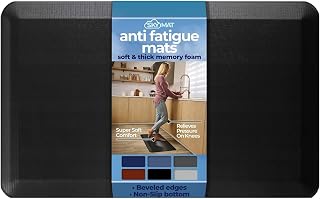
If your standing discomfort radiates into your lower back, a mat that encourages micro-movements can help. The Sky Solutions uses a two-layer foam design that balances cushioning with firmness. According to owner reports, users with lumbar sensitivity appreciate that this mat doesn’t feel too soft—it provides support without the “sinking” sensation that can worsen posture. The 20 × 30 inch size fits most standing-desk setups.
For deeper context on back support while standing, see Office Chair Lumbar Support: What Actually Works on a Budget.
Best for Retail or Kitchen Work
ComfiLife Premium Anti-Fatigue Kitchen Mat — ****
Retail floors, kitchen tile, and warehouse concrete demand a mat that resists spills, stains, and heavy foot traffic. ComfiLife’s premium kitchen mat uses an oil-resistant PVC surface and beveled edges that won’t curl or create trip hazards. Per manufacturer durability ratings and owner reports on Amazon, the mat withstands daily exposure to water, grease, and kitchen chemicals without degrading. The 1.25-inch foam core is thicker than many competitors in this price tier.
Best for Renters (No Permanent Installation)
Wellness by Navage Comfort Mat — ****
Renters and temporary-setup users need a mat that doesn’t require adhesive backing or permanent placement. The Wellness by Navage uses a non-slip rubber base that grips most floors without damaging them. It’s lightweight enough to roll up and store, and the material doesn’t off-gas or leave residue when removed. Based on owner reports, this mat works well on carpet, laminate, and tile—rare versatility in the budget category.
How to Choose the Right Mat for Your Space
| Factor | Recommendation |
|---|---|
| Work duration | 2–3 hours/day → 0.75” foam; 6–8 hours/day → 1”+ dense polyurethane |
| Floor type | Hard (tile, concrete, laminate) → textured/rubber base; Carpet → 0.75”+ thickness to prevent bunching |
| Space constraints | Tight desk area → 20×30”; High foot traffic → 32×20” or larger |
| Return window | Most brands offer 30-day returns; use this to test in your actual space |
For detailed sizing guidance, see standing desk converters which height range fits your workspace.
Maintenance and Longevity
A quality mat typically lasts 2–3 years with daily 8-hour use, per manufacturer durability ratings and long-running threads on r/StandingDesk. To extend life:
- Vacuum or sweep weekly to remove debris that can embed in the foam.
- Wipe spills immediately on kitchen mats to prevent staining and material breakdown.
- Rotate the mat every 3–6 months if possible to distribute weight evenly.
- Avoid extreme heat (direct sunlight, heaters) which can degrade foam and rubber.
- Don’t use harsh chemicals—warm soapy water cleans most mats safely.
Anti-Fatigue Mats vs. Other Standing Solutions
An anti-fatigue mat is one piece of a standing-desk setup. Pair it with proper footwear, a desk at elbow height, and a monitor at eye level for maximum benefit. For ergonomic footwear options, see best budget ergonomic shoes for standing all day.
FAQ
Q: Will an anti-fatigue mat help if I have flat feet or high arches? A: An anti-fatigue mat provides general cushioning and encourages micro-movements, which can reduce fatigue for most foot types. However, if you have significant structural issues (flat feet, plantar fasciitis), the mat is a supplement, not a cure. Proper insoles or orthotics may be necessary. Consult a podiatrist if pain persists.
Q: Can I use an anti-fatigue mat on carpet? A: Yes, but choose a mat at least 0.75 inches thick so it doesn’t bunch up under foot traffic. Ensure the rubber base doesn’t stain the carpet—test on a hidden area first, or use a non-staining mat like the Wellness by Navage.
Q: Can I use an anti-fatigue mat with a treadmill desk? A: No. Treadmill desks have their own walking surface; adding a mat underneath creates instability and increases trip risk. Use the mat only with stationary standing desks.
Q: Do anti-fatigue mats work on uneven concrete? A: They work, but less effectively. Uneven surfaces already force your stabilizer muscles to work harder. A mat helps, but you may benefit more from proper footwear with arch support. If the concrete is severely uneven, consider addressing the floor first.
Q: Do I need a special mat for standing desks, or will any anti-fatigue mat work? A: Any quality anti-fatigue mat works for standing desks. The “standing desk” label is mostly marketing. What matters is density, thickness, and fit.
Q: How long do anti-fatigue mats last? A: Budget-tier mats typically last 12–18 months with daily use. Mid-tier mats usually last 2–3 years. Lifespan depends on foam density, weight, and maintenance. Dense polyurethane foam outlasts cheap closed-cell foam significantly.
Final Verdict
Foot pain and fatigue don’t have to be the cost of standing work. The mats above deliver genuine cushioning and durability without breaking the budget. Start with a mat matched to your floor type and work duration, give it a full week of daily use to adjust, and don’t hesitate to return it if it doesn’t fit your space or feel right. Most users report noticeable relief within days—and after a month, many wonder how they ever stood without one.