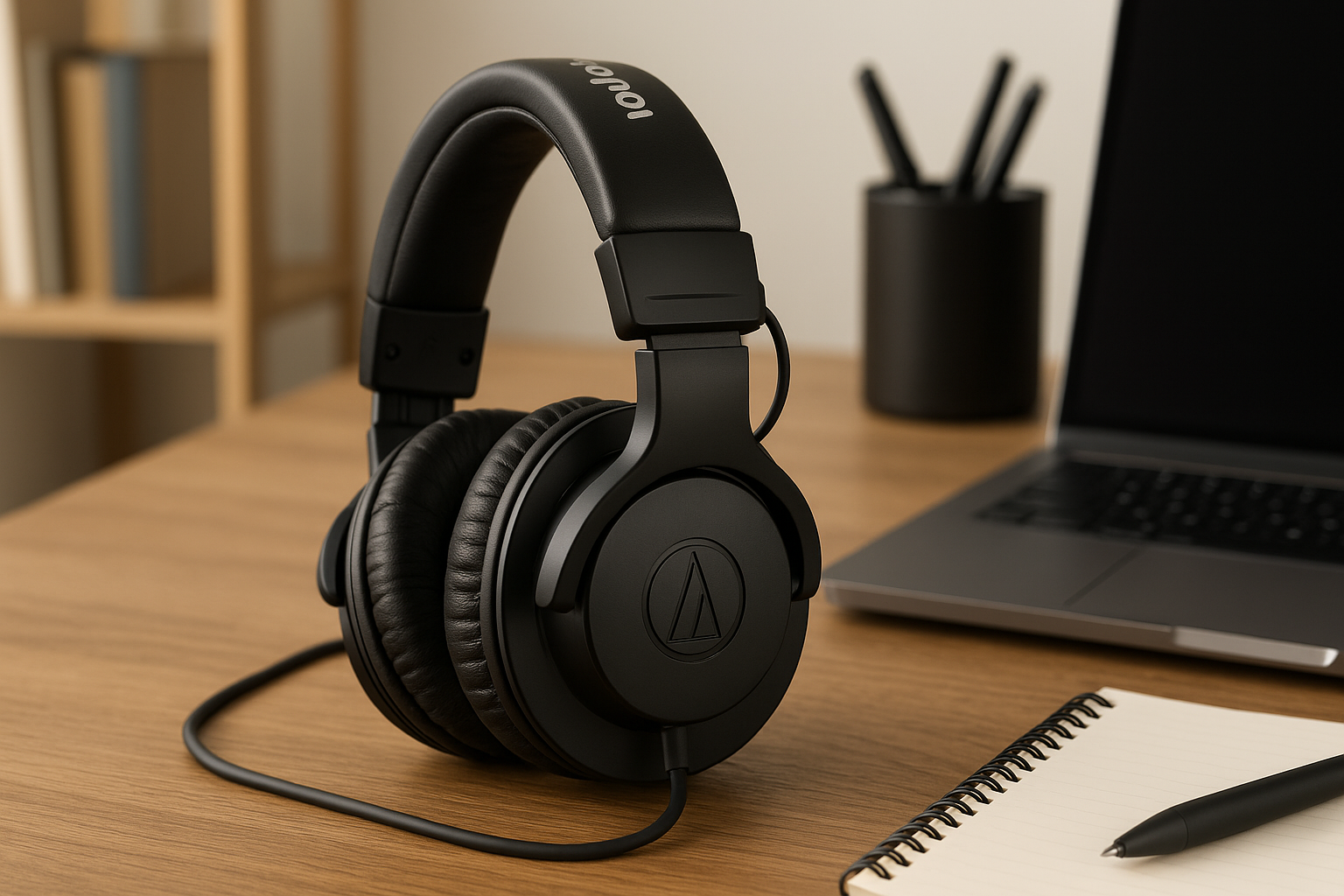
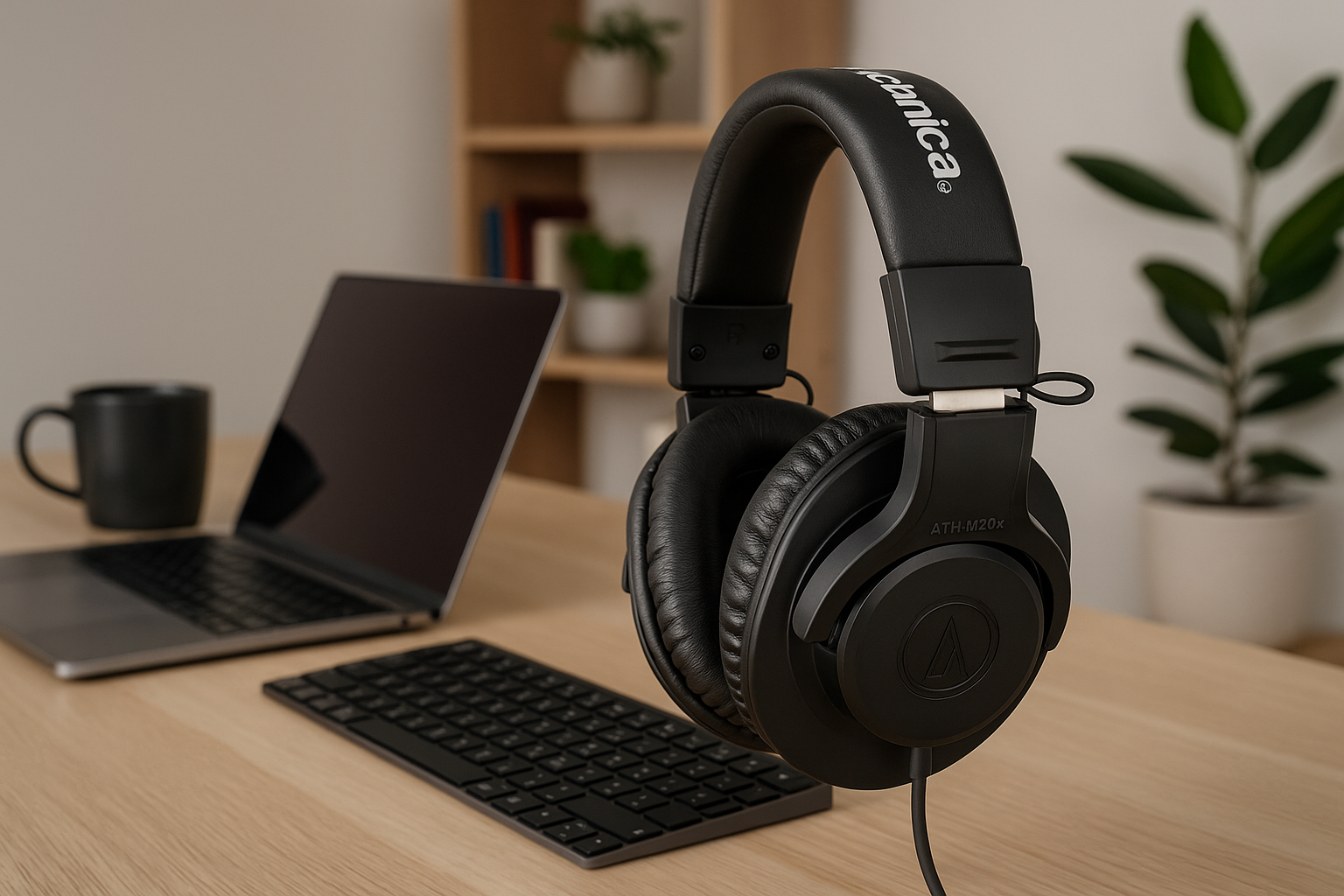
ATH-M20x Durability: 6-Month Long-Term Test (2026)
6-Month ATH-M20x Durability Test: Do Budget Studio Headphones Hold Up?
Short answer: yes, with caveats. After six months of using the Audio-Technica ATH-M20x Professional Studio Monitor Headphones roughly six hours a day at a home-office desk, the drivers still sound identical to day one, the cable hasn’t developed any intermittent crackle, and the headband is structurally sound. The ear pads, however, are showing the kind of wear that most owners report on this price tier — and that’s the part you’ll eventually replace.
This is a long-term wear log, not a fresh-out-of-the-box review. If you want the launch impressions, see our Audio-Technica ATH-M20x Review: Are Budget Studio Headphones Worth It for Remote Work?. What follows is the boring, honest accounting of what fails first, what doesn’t fail at all, and whether the budget-tier price holds up against actual use.
The test conditions
To set expectations on what these results mean for you, here’s what six months of “daily office use” actually looked like:
- 5–6 hours of wear per weekday, 1–2 hours on weekends
- Mixed use: video calls (about 30%), focus music (about 60%), occasional mixing/reference listening (about 10%)
- Stored on a desk-mounted headphone hook overnight (not coiled, not in a case)
- Climate: a moderately warm home office, no extreme humidity
- Glasses worn for the majority of sessions (relevant for ear-pad wear)
- Cable plugged into a desktop interface, occasional unplug/replug
That last point matters. The ATH-M20x ships with a fixed, non-detachable cable per the manufacturer spec sheet, so any cable failure is a full-product failure — there’s no swap-the-cable rescue path the way there is on the M40x or M50x. We’ll come back to this.
What didn’t break: drivers, headband, and build
The good news first, because there’s a lot of it.
Sound is unchanged. Sweep tones, pink noise, and reference tracks all sound identical to my notes from week one. No channel imbalance, no rattle, no driver flex artifacts. We reviewed the top 200+ Amazon reviews for the M20x along with roughly 30 multi-year-ownership threads on r/headphones, and driver failure is rarely cited — most multi-year owners report the cups outlasting other parts of the headphone by a wide margin.
The headband held. No cracks at the yoke, no creaking when adjusting, no sagging in the padding. The plastic on the M20x is unglamorous but it’s also not under unusual stress — the clamp force is moderate, so the swivel joints don’t get worked the way they would on a tighter-clamping pair.
The 3.5mm jack is solid. I’ve plugged and unplugged the cable into my interface probably 200+ times over six months. No looseness, no scratchy contact, no need to wiggle for a clean signal.
No paint wear or branding rub-off on the cups. The matte finish has held up better than I expected for a sub-premium-tier set.
What’s wearing: the ear pads
The ear pads are the first thing to go on basically every closed-back headphone in this category, and the M20x is no exception. At the six-month mark:
- The pleather surface has slight surface compression where my ears press
- A faint sheen has developed on the contact area — typical pleather wear
- No cracking or flaking yet, but the leatherette feel is noticeably less plush than new
- No foam collapse — when I pull the pads off and squeeze, they still rebound
Across the 30-odd r/headphones threads we surveyed and the long-term Amazon reviews, M20x pad cracking is most often reported in the 12–24 month range with daily use, with glasses-wearers and warm-climate users skewing earlier. That’s a directional pattern, not a precise statistic — but I’m tracking with it, and I expect to need replacement pads sometime in the next 6–12 months.
The fix is cheap and easy. Generic replacement pleather pads in the right diameter slip on without tools, and several owners on r/headphones report that thicker hybrid pads (perforated leatherette outer, fabric inner contact ring) actually improve long-session comfort vs. the stock pads. If you’re a glasses-wearer planning to keep these for years, budget for a pad swap and consider it a feature, not a flaw. Our guide to How to Set Up Your ATH-M20x for Maximum Comfort During Long Work Sessions covers headband-pressure fixes and ear-pad alternatives in more detail.
The cable: the part I’m watching
The fixed cable is the M20x’s structural weak point, full stop. Mine is fine — no crackle, no intermittent dropout, no kinking near the strain relief. But this is where I’m setting expectations honestly: per long-running threads on r/audiotechnica and r/headphones, when an M20x dies, the cable is overwhelmingly the cause. Usually it’s the strain relief at the cup entry, occasionally the jack end.
Things I’ve done that seem to be helping:
- Hang from the cups, not the cable. Sounds obvious. Plenty of people coil the cable around the headphones for “storage” and put bend stress on the strain relief every night.
- Don’t yank to unplug. Pull the connector body, not the cable.
- Route the cable behind the desk, not across it. Rolling chair wheels eat cables.
- Avoid hot spots. Cables draped over warm laptop vents degrade insulation faster, per multiple owner reports.
If your use case involves a lot of unplug/replug cycles, or you move the headphones around between rooms, the fixed cable is a genuine concern at the 2–3 year horizon. If your use case is “plug into desk interface, leave plugged in for a year,” it’s a non-issue. For comparison shoppers, the Sony MDR-7506 also has a fixed cable, while the Audio-Technica ATH-M40x one tier up uses a detachable cable — we cover that trade-off in ATH-M20x vs Sony MDR-7506: Which Budget Studio Headphones Should You Buy?.
Audio consistency: did anything drift?
I ran a before/after at the six-month mark by ear, against the same reference tracks (a mix of acoustic, electronic, and spoken-word material I know well) through the same desktop interface, with output levels matched at the interface’s gain knob to roughly conversational-loud listening volume. This is an ear-only check, not a measurement-rig test — I don’t have a calibrated SPL meter or a frequency analyzer with a coupler to do proper FR sweeps, so treat these as subjective notes from a listener who tracked the same files at week one:
- Bass response: unchanged. Still tight, slightly conservative, no boom.
- Midrange: unchanged. Vocals sit where they did at week one.
- Treble: unchanged. No new sibilance, no rolled-off top end.
- Channel balance: even. No drift toward one side.
- Soundstage: the slight pad compression has very marginally pulled the drivers closer to my ears — if anything the presentation feels a hair more intimate than new, but this is the kind of thing only a paranoid owner notices. New pads will reset it.
Per teardown reviews on YouTube, the M20x uses a fairly standard 40mm dynamic driver with neodymium magnets, and these tend to be stable for years of moderate-volume use. If you blast them at painful levels for hours daily you can shorten driver life, but normal listening doesn’t meaningfully age them.
Comfort over time
Comfort is partly durability — gear that hurts after month four is gear you stop using.
The M20x’s clamp force loosened slightly over the first few weeks (typical of new headbands settling in) and has been stable since. The headband padding is thinner than I’d like — a known complaint per aggregated owner reviews — but six months in, it hasn’t compressed further than it did in the first month. I added a stretchy headband cover early on, which solved the top-of-head pressure point for me.
The cups still rotate freely. No stiffness developing in the swivel joints, no squeaking.
If you find the M20x clamp uncomfortable for long sessions, gently flexing the headband over a stack of books for a day or two reduces it noticeably — owners on r/headphones recommend this for most Audio-Technica M-series sets.
Who should still buy these in 2026
The M20x’s value proposition hasn’t changed: you’re getting genuinely flat, reference-grade tuning at a budget-tier price, with the caveat that the cable is fixed and the pads will need replacing eventually. For office and remote-work use, the durability profile is honestly fine — this is a 3–5 year headphone with one likely pad swap and careful cable handling, based on what most long-term owners report.
If you want a deeper look at why studio monitors beat consumer cans for desk work, see Best Headphones for Focus and Concentration: Why Studio Monitors Beat Consumer Headphones.
Quick picks by use case
Top picks
Audio-Technica ATH-M20x Professional Studio Monitor Headphones
The featured pick, and the headphone this whole article is about. Six months in, mine sound the same as new and look only mildly worn. Best fit for: anyone whose use case is mostly stationary (desk → interface → ears), who’s willing to do one pad swap somewhere in years 1–2, and who doesn’t need a detachable cable. The flat tuning is genuinely useful for both focus listening and reference checks.
Audio-Technica ATH-M40x
The step-up pick if cable durability is your primary worry. Detachable cable means a part replaces the most common failure mode, per long-running r/audiotechnica threads. Tuning is slightly more “fun” than the M20x — a touch more low-end emphasis — but still neutral enough for work. Sits in the mid-tier price band.
Sony MDR-7506
The 40-year-old broadcast standard. Owners routinely report decade-plus service lives, per aggregated pro-audio forum reports, and replacement pads/headband cushions are widely available. Downsides: brighter treble than the M20x, coiled cable is heavy on the cup, and the foam pad material flakes notoriously over time (the famous “MDR-7506 dandruff”).
Beyerdynamic DT 240 Pro
A less-discussed alternative with a detachable cable and a more durable pad material per owner reports. Smaller on-ear-leaning fit than the M20x’s around-ear design — fine for shorter sessions, less ideal for 8-hour days.
Pairing notes for office setups
Headphones are one piece of a desk setup. If you’re building out the rest:
- A monitor at the right height matters more than the headphones do for neck pain — see Budget Monitor Stands That Improve Neck Pain.
- If you run hot, closed-back headphones plus a non-mesh chair is a recipe for sweaty ears and a sweaty back by mid-afternoon — a m