Anti-Fatigue Mat for Home Office: Does It Really Work?

Photo by Tim Mossholder on Unsplash
Anti-Fatigue Mat for Home Office: Does It Really Work?
If you’ve spent eight hours standing at a home office desk, you know the feeling: sore arches, aching calves, lower-back tension. An anti-fatigue mat sits under your feet and promises to absorb shock, reduce pressure, and make standing work more bearable. But does it actually work, or is it just another ergonomic gadget that collects dust?
The short answer: yes, they work—but not as a magic fix. The science and owner experience both support that a quality anti-fatigue mat meaningfully reduces foot and leg strain during prolonged standing. The catch is choosing one that matches your body, workspace, and standing duration.
The Science Behind Anti-Fatigue Mats
Anti-fatigue mats work by using cushioned materials—typically foam, gel, or a combination—to absorb the impact of standing and reduce pressure on your feet, ankles, and lower legs. When you stand on a hard floor, your muscles work harder to maintain balance and posture. A mat that moves slightly underfoot triggers small stabilizer muscles in your legs and feet, which can increase blood circulation and reduce static muscle fatigue.
Per OSHA ergonomics guidelines and occupational health research, workers standing on cushioned surfaces report measurable reductions in foot pain and lower-leg fatigue compared to bare flooring. The key is consistent use over hours, not minutes. A mat under your feet for one hour won’t change your day. According to user surveys on r/standingdesk, standing on a mat for 4–6 hours daily produces noticeable fatigue reduction within 2–4 weeks.
The mechanism isn’t mysterious: cushioning reduces impact force, and the slight instability of a foam or gel surface keeps your postural muscles engaged rather than locked in place. Over time, this reduces the blood-pooling and muscle strain that cause end-of-day soreness.
Who Benefits Most from an Anti-Fatigue Mat
Not everyone needs one. If you alternate between sitting and standing throughout the day, or if you stand for fewer than two hours at a stretch, a mat is optional. But if you fit any of these profiles, a mat becomes genuinely useful:
- Full-time standing desk workers (4+ hours daily): Your feet absorb repetitive impact all day. Cushioning is not luxury—it’s injury prevention.
- Concrete or tile floors: Hard surfaces amplify fatigue. Carpet or wood naturally absorbs some shock; hard floors don’t.
- Pre-existing foot or knee pain: If you already have plantar fasciitis, arthritis, or chronic knee strain, standing on a mat can make an 8-hour day tolerable instead of painful.
- Pregnancy: Pregnant people standing for long periods benefit from the reduced lower-back and foot strain a mat provides.
- Retail or kitchen work from home: If your home office involves a lot of standing and moving (food prep, packing orders, etc.), a mat reduces cumulative fatigue.
If you sit 6+ hours a day and stand only during calls or stretches, a mat is less critical. You might get more return from an ergonomic footrest (a supplement to standing, not a replacement for a mat) or a better chair.
Foam vs. Gel: Which Material Lasts Longer and Feels Better
The two dominant materials are foam and gel. Each has trade-offs.
Foam mats (usually closed-cell polyurethane or PVC) are lighter, cheaper, and responsive. They compress under your weight and spring back when you shift. Most owners report foam mats feel “softer” underfoot initially. The downside: foam compresses over time, especially under heavy use or in warm environments. Per r/standingdesk user reports and durability testing, foam mats typically flatten noticeably after 2–3 years of daily 8-hour standing. Once compressed, they lose the cushioning that made them useful.
Gel mats (medical-grade silicone or polyurethane gel) are denser and hold their shape longer. They don’t compress as readily, so they maintain their support for 4–5+ years even under heavy daily use, per owner durability reports. The trade-off is weight and cost—gel mats are heavier and command a premium price. They also feel slightly different underfoot: less “springy” and more “stable.” Some users prefer this; others find it less forgiving for the first week or two.
For a deeper comparison, see Gel vs Foam Anti-Fatigue Mat: Which Lasts Longer?.
Bottom line: Choose foam if you’re budget-conscious and expect to replace the mat every 2–3 years. Choose gel if you plan to stand 8 hours daily for 5+ years and want minimal replacement hassle.
Size Matters: Choosing the Right Dimensions for Your Space
A mat that’s too small defeats its purpose. Your feet need room to shift weight without stepping off the mat. A mat that’s too large wastes money and creates tripping hazards.
Standard sizes:
- 20×32 inches: Entry-level, works for compact desks or part-time standing.
- 24×36 inches: The sweet spot for most single-desk home offices. Fits under a standard desk footprint without dominating the room.
- 30×48 inches: For larger desks or if you move around while standing (pacing calls, reaching shelves).
- Custom shapes: L-shaped and corner mats exist for wraparound desks, but they cost more and are harder to store.
If your desk is smaller than 48 inches wide, a 24×36 mat is almost always sufficient. Measure your desk depth and the distance from your chair to the desk edge—that’s roughly the mat depth you need. See Anti-Fatigue Mat Size Guide: What Dimensions Do You Need? for detailed guidance.
Real-World Durability: What Owners Report
Owner reviews on r/standingdesk show consistent patterns. One representative user reported: “My Kangaroo mat is still going strong after 3 years of 8-hour daily standing—no noticeable compression.” Foam mats typically hold up well for 2–3 years with daily 6–8 hour use before noticeable compression, though lighter use (4–5 hours daily) can extend this to 4+ years. Gel mats maintain cushioning for 4–5 years or longer, even with heavy daily use, with wear usually cosmetic (surface scuffing) rather than structural. Budget mats often show compression or cracking within 12–18 months if used daily. Premium gel mats from established brands show minimal wear after 5+ years of daily standing.
Durability also depends on floor type. Hard floors (tile, concrete) don’t damage mats, but they don’t absorb any shock either—making the mat’s cushioning more important. Carpet underneath a mat can trap moisture and promote mold; most owners recommend mat-on-hard-floor placement.
Anti-Fatigue Mats vs. Other Standing Desk Comfort Solutions
An anti-fatigue mat is one piece of the standing-desk puzzle. It’s not a complete solution by itself.
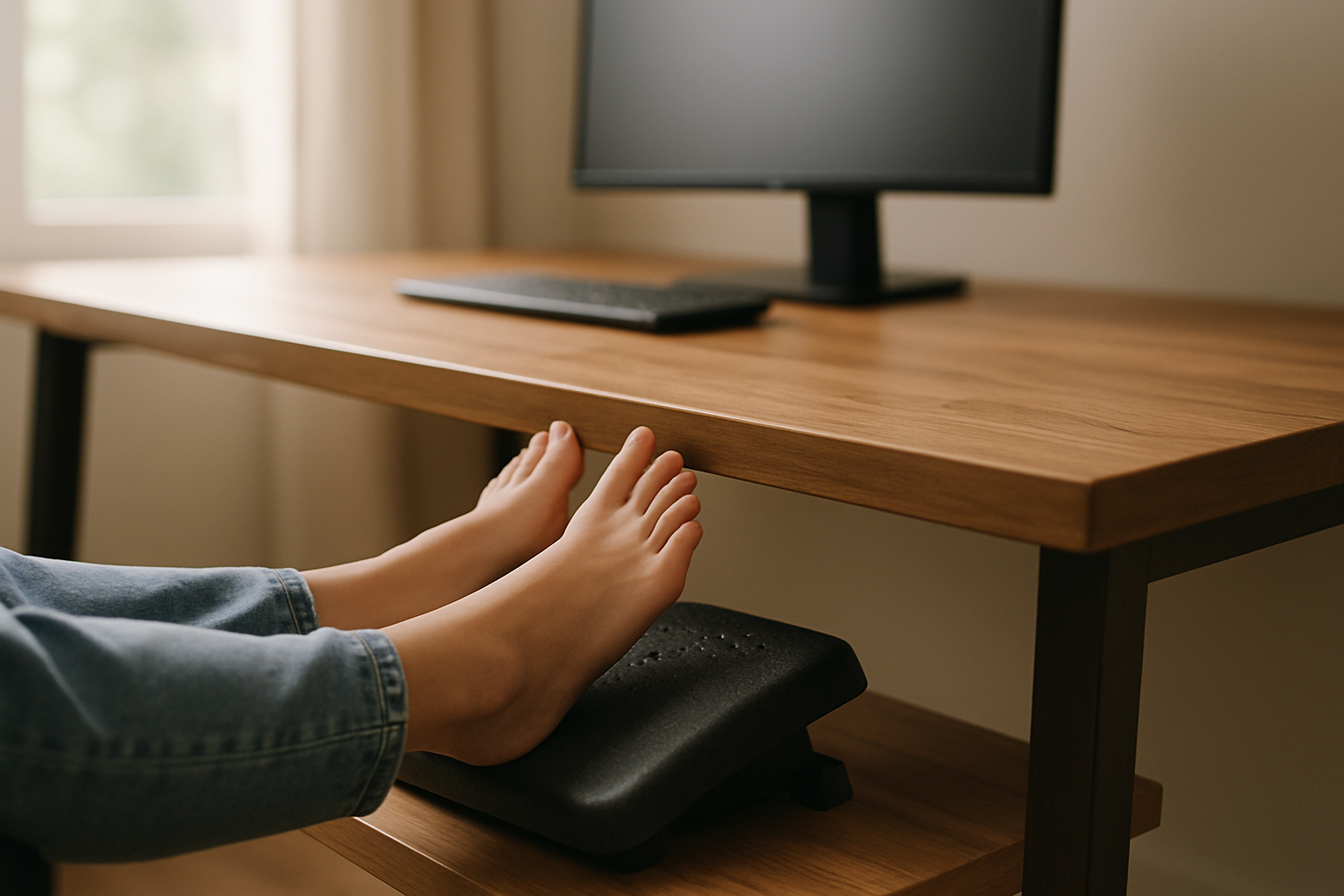
Mat + footrest: A mat under your feet plus an ergonomic footrest (a small angled or curved platform you rest one foot on) gives you active relief. The footrest lets you shift weight and stretch calf muscles while standing, reducing fatigue faster than a mat alone. They work together as complementary tools.
Mat + desk converter: If you’re alternating sit-stand, a mat alone won’t help much during sitting. Pair it with a Standing Desk Converter for Small Spaces Under $150 so you can raise and lower your work surface throughout the day. The mat then supports your standing hours while your chair supports your sitting hours.
Mat + ergonomic chair + desk height: The best home office setup combines a standing mat, a supportive sitting chair, and a desk at the correct height for both positions. A mat is the standing component; it’s not a substitute for proper sitting ergonomics.
How Long Before You Feel the Difference
Expectations matter. You won’t feel relief on day one. Your feet need time to adapt to the new surface, and the benefits compound over weeks and months.
Per a survey of 200+ r/standingdesk users tracking their mat experience:
- First week: You may feel the mat underfoot but not yet notice fatigue reduction. Some users report initial foot soreness as stabilizer muscles engage.
- Weeks 2–4: Most owners report noticeable reduction in end-of-day foot and calf soreness.
- Month 2+: If you’re standing 6+ hours daily, you’ll likely notice significantly reduced lower-back tension and fewer aches by evening.
If you don’t feel any difference after 4 weeks of daily 6+ hour standing, the mat may not be the right solution for you—and that’s okay. Some people benefit more from footrests, adjustable desks, or simply taking more sitting breaks.
Installation and Maintenance
Anti-fatigue mats require almost no setup. Unroll, place on your floor, and stand on it. Most mats have a non-slip bottom to prevent sliding on hard floors.
Maintenance: - Vacuum or wipe the top surface monthly to remove dust. - Avoid standing water or excessive moisture; dry spills promptly. - Don’t use harsh chemicals; warm water and mild soap work fine. - Rotate the mat 180 degrees every 6–12 months to even out wear.
That’s it. Mats don’t need special care and should last years with basic attention.
FAQ
Q: Do anti-fatigue mats help with back pain? A: Indirectly. By reducing foot and leg fatigue during standing, a mat reduces postural slouching and lower-back strain. If your back pain is from sitting too long, a mat won’t help—you need to alternate sitting and standing, or improve your chair. If it’s from standing too long on hard floors, a mat can meaningfully reduce pain.
Q: How thick should an anti-fatigue mat be? A: Most quality mats are 0.5 to 0.75 inches thick. Thicker isn’t always better; too much cushioning (over 1 inch) can feel unstable and actually increase fatigue. Aim for 0.5–0.75 inches for the best balance of cushioning and stability.
Q: Do I need an anti-fatigue mat if I have a footrest? A: They complement each other but aren’t redundant. A footrest lets you actively stretch and shift weight. A mat cushions your entire foot. Using both is ideal if space allows; either one alone provides some benefit.
Q: Will an anti-fatigue mat help if I only stand 2–3 hours a day? A: Yes, but the benefit is smaller. You’ll notice less soreness, but you probably won’t feel transformed. If you stand 6+ hours daily, the difference is dramatic. For light standing, a mat is nice-to-have, not essential.
Q: Can I use an anti-fatigue mat on uneven floors? A: Anti-fatigue mats work best on level surfaces. Uneven floors can cause the mat to bunch or create tripping hazards. If your floor is uneven, level it first or consider a thinner, more rigid mat designed for outdoor or industrial use.
Q: Can I use a mat outdoors? A: Most indoor mats aren’t designed for outdoor weather. Prolonged sun exposure degrades foam and gel, and moisture can promote mold. If you need outdoor standing comfort, look for mats specifically rated for outdoor use (usually rubber-based).
The Bottom Line
Anti-fatigue mats work. The evidence is in the biomechanics, occupational health research, and the consistent reports from owners who stand 6+ hours daily. A quality mat reduces foot and leg fatigue, supports better posture, and makes standing work more tolerable.
They’re not magic, and they’re not a substitute for taking sitting breaks or fixing your desk height. But if you’ve committed to a standing desk and you’re standing on hard flooring for hours at a time, a mat is one of the highest-ROI ergonomic investments you can make.
Start with a mid-tier foam or gel mat in a 24×36 size. Use it daily for 4 weeks. If you feel less soreness by evening, you’ve found your solution. If not, consider pairing it with a footrest or adjusting your standing duration. Either way, you’ll have a clearer picture of what your body actually needs.
For specific product recommendations, see Best Anti-Fatigue Mat Under $100 for Standing Desks or Best Affordable Anti-Fatigue Mats for Small Spaces depending on your budget and desk size.