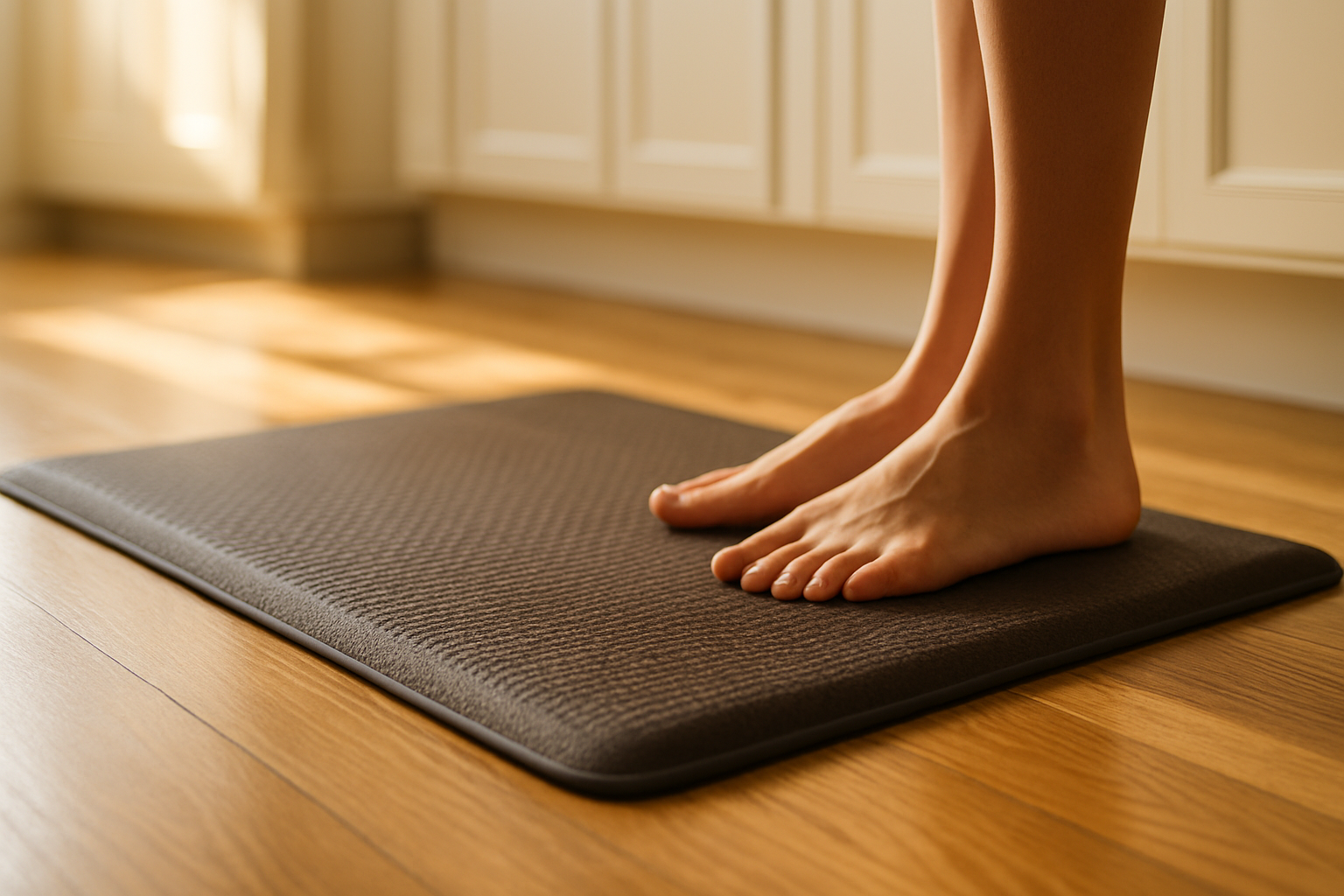
Budget Anti-Fatigue Mat Under $75 for Standing Desk

Photo by Tim Mossholder on Unsplash
Budget Anti-Fatigue Mats Under $75: Real Relief Without Breaking the Bank
Standing all day at a desk feels good in theory—until your feet, calves, and lower back start screaming by hour three. A quality anti-fatigue mat genuinely helps, but you don’t need to spend + to get one that works. The best options sit where you get proper cushioning, durability, and actual ergonomic benefit.
Why Standing Desks Need Anti-Fatigue Mats
Standing at a desk for extended periods puts constant pressure on your feet, ankles, and lower spine. Unlike sitting, standing offers no shock absorption between your body and the floor. An anti-fatigue mat solves this by introducing a slightly compressible surface—typically 0.5 to 1.5 inches thick—that absorbs impact and encourages subtle micro-movements that improve blood flow to the lower legs and feet, per ergonomic research.
The mat’s surface texture also matters. Contoured or textured tops (like the signature waves on some models) engage small stabilizer muscles in your feet and calves, which reduces fatigue faster than a flat surface. At the under- price point, you’re trading premium materials and brand markup for solid foam construction and practical design—and honestly, that’s enough for most home-office setups.
What to Look For in a Budget Anti-Fatigue Mat
Before picking a specific model, know what separates a genuinely helpful mat from a thin piece of foam that won’t last:
Thickness and density. Budget mats range from 0.5 to 1 inch thick. Aim for at least 0.75 inches with medium-to-high density foam. If it feels like a yoga mat or pool noodle, it won’t hold up to eight hours of standing. Mats in the 0.75–1 inch range typically remain functional for 2–3 years of daily use before noticeable compression.
Surface texture. Flat surfaces are cheaper but less effective. Contoured or wavy tops (like Topo Mat’s signature design) cost only slightly more and genuinely reduce foot fatigue faster.
Non-slip base. Crucial on hardwood or tile floors. A mat that slides around defeats the purpose and creates a tripping hazard. Rubber or PVC backing is standard in this price range and works well.
Size and footprint. Most budget mats run 20×30 or 24×36 inches. Measure your standing area first—you want your feet fully on the mat when standing at your desk.
Beveled edges. A mat with tapered or beveled edges is safer and less likely to catch your foot or roll up at the corners over time.
Top Budget Anti-Fatigue Mats Under $75
Best for Small Spaces and Hardwood Floors
Imprint CumulusPro Nantucket —
The Nantucket is a compact 20×30 option with premium-feeling foam that punches above its weight class. It uses closed-cell foam that resists moisture and won’t compress unevenly. The surface has a subtle contour that encourages subtle foot movement without being distracting. Owners consistently report excellent grip on hardwood and tile, and the mat doesn’t off-gas noticeably like some budget foams do.
This is the pick if your standing desk is narrow or you’re in a rental where a large mat won’t fit.
Best for Movement and Long-Term Comfort
The Topo Mat’s signature wavy surface is the standout feature here. Unlike flat mats, the contours actively engage your foot and calf muscles, which reduces fatigue faster and makes standing feel less static. The mat is 0.5 inches thick but uses high-density EVA foam that feels surprisingly supportive. At 27×30 inches, it’s slightly larger than budget competitors.
Users report that the textured surface remains effective after 2+ years of daily use. The mat is also lighter than solid-foam alternatives, making it easier to clean or move if needed. If you find flat mats boring or ineffective, this one delivers noticeably better results.
Best for Maximum Cushioning on a Budget
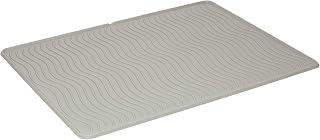
PetFusion’s mat is thicker than most budget options—around 1 inch—with a soft, memory-foam-like feel. It’s sized at 24×36 inches, giving you plenty of room for both feet and some side-to-side movement. The rubber base is sticky enough to grip tile and hardwood without sliding.
This is the pick if you prioritize comfort over trendy features. The extra thickness means your feet sink in slightly more, which many people find more restful during long standing sessions. The mat holds up well on concrete basement floors and doesn’t develop odor issues like cheaper PVC-backed mats sometimes do.
Best for No-Frills Reliability
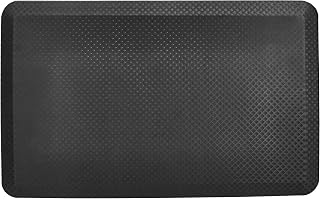
Sometimes simple works. AmazonBasics’ mat is a straightforward 20×32 inch foam rectangle with a rubber backing. It’s not fancy—no waves, no memory foam, no premium branding—but it’s solid mid-tier foam that compresses evenly and doesn’t bottom out under eight hours of standing.
This is the pick if you want a proven, replaceable mat that you don’t mind swapping out every 2–3 years. Many home-office workers buy two and rotate them, or use one at home and one at a second workspace. The mat’s main weakness is that it can curl at the edges after a year or two, but the core foam itself stays functional.
Comparing Budget Mats: Thickness, Material, and Durability
| Mat | Thickness | Material | Size | Typical Lifespan |
|---|---|---|---|---|
| Imprint CumulusPro | 0.75” | Closed-cell foam | 20×30” | 2–3 years |
| Topo Mat | 0.5” | High-density EVA | 27×30” | 2+ years |
| Wellness Mat | 1.0” | Memory foam blend | 24×36” | 2–3 years |
| AmazonBasics | 0.75” | Standard foam | 20×32” | 1.5–2 years |
Installation and Care Tips
Placement. Position the mat so your feet sit fully on it when standing at your desk. You don’t need it to extend under your desk chair—just where you stand. If your standing area is larger, two mats can work, though a single larger mat is usually better for consistent support.
Break-in period. New foam mats may feel slightly firm for the first few days. This is normal. The foam softens and conforms to your feet within 3–7 days of regular use. If it still feels too hard after a week, the mat’s foam density is probably too high for your preference.
Cleaning. Wipe down with a damp cloth and mild soap monthly. Avoid harsh chemicals or machine washing, which can degrade the foam. Dry it flat or hang it vertically. Most budget mats don’t need special conditioners.
Storage. If you need to store the mat (e.g., moving offices), roll it loosely rather than folding it in half repeatedly, which can create creases that don’t fully recover.
Should You Go Under $50 or Spend More?
If your budget is tighter, solid options exist below though the trade-off is usually thinner foam or less durable materials, so you may replace it sooner.
Conversely, spending + gets you premium brands with longer warranties, better materials, and sometimes ergonomic features like conductive surfaces or gel-infused foam. For most home-office users, the range offers the best value—you’re past the ultra-budget tier where durability suffers, but you’re not paying for brand prestige.
Pairing Your Mat With Other Standing Desk Accessories
An anti-fatigue mat works best as part of a complete standing setup. A desk riser or converter makes standing ergonomic by raising your monitor and keyboard to eye level, which reduces neck and shoulder strain and lets your mat focus on foot support. An ergonomic keyboard reduces wrist strain while standing, and a monitor arm positions your screen at eye level without taking up desk space.
Standing for the full workday isn’t ideal—alternating between sitting and standing is healthier. Most ergonomic research suggests 20–30 minutes of standing followed by 20–30 minutes of sitting as an optimal pattern.
FAQ
How long do budget anti-fatigue mats last? Most budget mats last 1.5–3 years with daily use, depending on foam density and your body weight. Thicker, denser mats last longer. You’ll notice gradual compression rather than sudden failure—the mat becomes less cushioned over time. Check your product’s warranty for specific coverage details; most budget mats include 1–2 year limited warranties.
Can I use an anti-fatigue mat on carpet? Yes, but it’s not ideal. The mat may shift slightly if your carpet is thick or plush. A thin, low-pile carpet works fine. On thick carpet, consider a mat with a stickier rubber backing, or place a non-slip rug pad underneath.
Do I need a mat if I only stand for 2–3 hours a day? Not strictly necessary, but helpful. Even light standing benefits from cushioning. If you’re standing less than two hours daily, a basic mat is fine. If you’re hitting four-plus hours, aim for the thicker, denser options in this guide.
What’s the difference between an anti-fatigue mat and a gel mat? Gel mats use liquid-filled chambers for cushioning, while foam mats compress. Foam is cheaper and more durable; gel feels softer initially but can leak or harden over time.
Will a mat help if I have plantar fasciitis or other foot pain? An anti-fatigue mat reduces general foot fatigue and can help prevent pain from worsening, but it’s not a medical treatment. If you have chronic foot pain, consult a doctor or podiatrist. A mat combined with proper footwear and stretching often helps, but results vary.
Final Verdict
Spending on an anti-fatigue mat is one of the smartest ergonomic investments for a standing desk. You get real cushioning, proven durability, and enough options to match your space and preference without overpaying for brand names or unnecessary features.
The Topo Mat stands out if you want active foot engagement and proven long-term comfort. The Imprint CumulusPro wins for small spaces and hardwood floors. The Wellness Mat is your choice if you prioritize cushioning. And AmazonBasics works if you want simple, replaceable reliability.
Start with one mat, use it for a week, and pay attention to how your feet and legs feel by end-of-day. A good mat should reduce soreness noticeably within the first few days. If it doesn’t, your foam density might be off, or you may need to pair it with other ergonomic changes—like a better desk height or monitor position.