Best Anti-Fatigue Mat for Home Office 2026
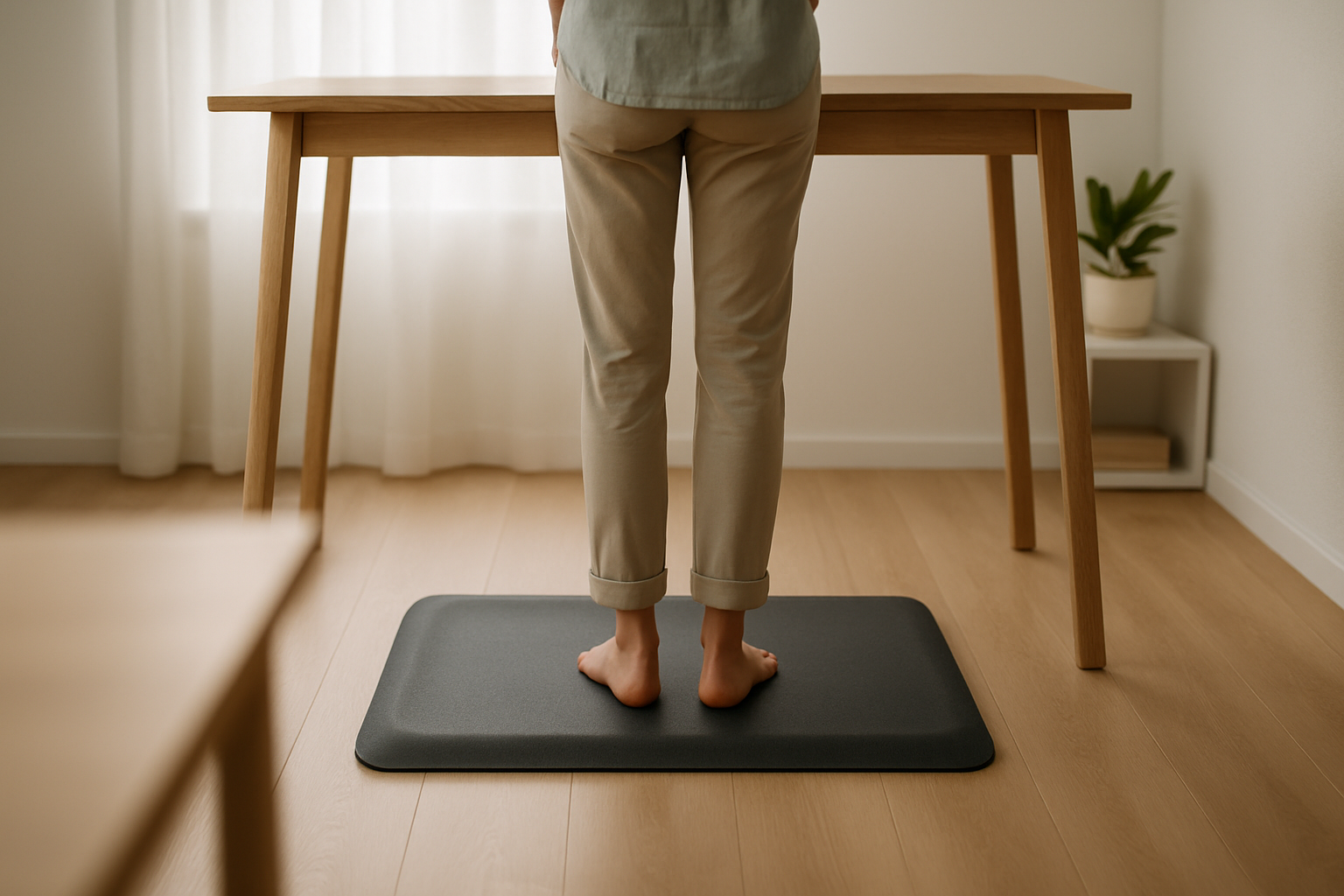
Best Anti-Fatigue Mats for Home Office in 2026
If you work from home and stand for more than a few hours daily, your feet and lower back know the problem: hard flooring can feel draining and builds pain. An anti-fatigue mat isn’t a luxury—it’s a productivity tool. The right one reduces fatigue, improves circulation, and keeps you standing longer without the ache that sends you back to your chair.
This guide covers what actually works, how to pick one for your space and budget, and which models deliver on their claims based on real owner feedback and ergonomic research.
How Anti-Fatigue Mats Work
Anti-fatigue mats work by forcing your leg muscles to micro-engage as you stand. Unlike a flat floor, a slightly cushioned surface with subtle contours or texture keeps your body from “locking” into static posture. This constant micro-adjustment increases blood flow to your legs and feet, reducing the pooling sensation that causes fatigue.
The cushioning matters too. Per ergonomic research, mats with 0.75–1.5 inches of closed-cell foam or gel provide the sweet spot: enough give to reduce impact on joints, but firm enough to keep your posture stable. Too soft (like a yoga mat) and you’ll sink and feel unstable; too hard and you lose the fatigue-reduction benefit.
Anti-Fatigue Mat for Home Office: Do They Work?
What to Look For When Choosing
Thickness and Cushioning Thicker isn’t always better. Most effective mats are 0.75–1.25 inches thick. Anything over 1.5 inches often feels squishy and throws off your posture, especially if you use a standing desk at a fixed height. Closed-cell foam or gel-infused foam is more durable than open-cell, which breaks down faster under daily use.
Surface Texture and Contour Some mats are flat with a textured top; others have subtle waves or massage-like patterns. The texture keeps your feet engaged without being distracting. Contoured mats like Topo command premium pricing because their surface design encourages constant micro-adjustments. Users standing 6+ hours daily report measurably better engagement with contoured designs compared to flat alternatives, though specific comparative studies are limited; most evidence comes from aggregated owner reviews on retail platforms.
Size and Fit A mat that’s too small (under 20×30 inches) won’t support your full stance range. Too large and it crowds a small office. Most standing-desk users find 24×36 or 30×36 inches ideal. Anti-Fatigue Mat Size Guide for Standing Desks
Durability and Warranty Quality mats hold up for 3–5 years of daily use before showing compression or surface wear. Cheap mats often flatten after 18–24 months. Look for mats with 2+ year warranties.
Non-Slip Base A mat that slides around defeats the purpose. Rubber or textured bases grip better than slick plastic. Test stability before committing, especially if you have smooth flooring.
Top Picks by Scenario
Best for All-Day Standing
The Topo is the premium choice for serious standing-desk users. Its contoured surface—with gentle peaks and valleys—creates a landscape that forces constant micro-adjustments. Owners report noticeably reduced foot pain and leg fatigue after 6+ hours of standing. The trade-off: premium pricing (+) and a steeper learning curve (some users need 1–2 weeks to adjust to the texture).
Best for Tight Budgets
A mid-tier option that doesn’t skimp on cushioning. Owners report it holds up well for 2–3 years of daily use, and the flat surface is immediately comfortable—no adjustment period. It won’t match a Topo’s engagement features, but it cuts fatigue meaningfully compared to standing on bare floor.
Best for Small Spaces
Kangaroo Premium Anti-Fatigue Mat
Compact 20×32 inches, so it fits under most standing desks without crowding the space. The cushioning is solid despite the smaller footprint, and the non-slip base grips well on hardwood or tile. Good for renters or anyone in a cramped home office.
Best for Joint Pain Relief
Implus Airsoft Anti-Fatigue Mat
Thicker foam (1.5 inches) with a gel-infused top layer absorbs impact better than standard mats. Owners with knee or lower-back pain report meaningful relief. The trade-off: it’s softer underfoot, which some users find unstable for standing work (though most adapt within a week).
Best for Aesthetics
Bamboo Anti-Fatigue Mat by Varidesk
If you hate the look of a bright-colored foam mat, this one blends into a home office. Real bamboo top with cushioned base underneath. It performs like a functional mat while looking like a rug. Slightly pricier than rubber alternatives, but worth it if aesthetics matter in your space.
Size Guide for Your Space
Anti-Fatigue Mat Size Guide for Standing Desks
Desk Width Under 48 inches: 24×36 inches is your baseline. Fits most compact setups without dominating the floor.
Desk Width 48–60 inches: 30×36 or 30×48 inches. Gives you room to shift weight side-to-side without stepping off the mat.
Desk Width Over 60 inches: 36×48 inches or larger. Prevents the “tightrope” feeling if you have a wide workspace.
Measure your actual standing footprint, not just your desk width. You want the mat to extend at least 6 inches beyond your normal stance on all sides.
Material Comparison: Rubber vs. Foam vs. Bamboo
Rubber (EVA or Nitrile) Durable, non-slip, easy to clean. Mid-tier pricing . Lasts 3–5 years. Less cushioning than gel-foam but stable underfoot. Best for users who value longevity.
Closed-Cell Foam Softer, more cushioning, lightweight. Budget-friendly . Lasts 2–3 years before compression sets in. Best for pain relief and comfort.
Gel-Infused Foam Premium cushioning, better impact absorption, lasts longer than plain foam (3–4 years). Premium pricing (+). Best if you have joint pain or stand 6+ hours daily.
Bamboo with Foam Base Aesthetically pleasing, durable top layer, cushioned bottom. Premium pricing (+). Lasts 3–5 years. Best for offices where appearance matters.
Bamboo vs. Rubber Anti-Fatigue Mats: Budget Comparison
How Long Before You Feel the Benefit?
Most users notice reduced fatigue within the first 2–3 days of standing on a quality mat. Significant pain relief (if you have existing foot or back pain) typically takes 1–2 weeks as your body adapts to the engagement. If you feel nothing after 3 weeks, the mat likely isn’t the right fit for your body mechanics—some people respond better to other ergonomic interventions like standing-desk converters or footrests.
How Long to Stand on Anti-Fatigue Mat Before Seeing Benefits
Budget Tiers and Where to Spend
: Basic foam mats with minimal cushioning. Fine for occasional standing (2–3 hours daily). Compress faster and typically last 18–24 months.
: Solid cushioning, good durability, brand warranties. Best value for most home-office users standing 4–6 hours daily. Lasts 2–3 years with proper care.
+: Contoured surfaces, gel-infused foam, luxury materials, extended warranties. Worth it only if you stand 6+ hours daily or have chronic pain.
Best Anti-Fatigue Mats Under $100 in 2026 Affordable Anti-Fatigue Mats Under $75
Common Mistakes to Avoid
Buying a mat that’s too small. You’ll step off it constantly, defeating the purpose. Measure before ordering.
Using a contoured mat if you have balance issues. Textured surfaces can feel unstable for people with proprioceptive challenges or inner-ear sensitivity. Start with a flat mat if you’re uncertain.
Pairing a mat with a chair that’s too high. If your chair height doesn’t match your standing-desk height, you’ll strain your lower back regardless of the mat. Adjust your setup holistically.
Placing a mat on uneven flooring. Rocking on an uneven surface negates fatigue benefits and creates injury risk. Level your floor or choose a different location.
Ignoring the break-in period. Contoured mats feel strange for the first 1–2 weeks. Give yourself time before deciding it’s not working.
Complementary Ergonomic Upgrades
An anti-fatigue mat works best as part of a complete standing setup. Consider pairing it with:
- A standing-desk converter (Sit-Stand Desk Converter Under $200: Top Choices): Allows you to alternate between sitting and standing throughout the day. Mats reduce standing fatigue, but converters prevent the strain of staying in one posture too long.
- A footrest (Budget Footrest for Home Office Under $50): Provides a place to rest one foot while standing, reducing lower-back strain during seated breaks and adding movement variety to your stance.
- An ergonomic keyboard (Budget Ergonomic Keyboard Under $75 for Home Office): Prevents wrist and shoulder strain while standing. A mat keeps your legs engaged, but poor typing posture can create upper-body tension that offsets the benefit.
- A monitor arm (Single Monitor Arm Under $50: Budget Picks That Work): Keeps your screen at eye level while standing, preventing forward-head posture that strains your neck and shoulders.
FAQ
Do anti-fatigue mats actually work? Yes, for most people. They reduce fatigue and improve circulation by forcing micro-muscle engagement. However, results depend on your body, standing duration, and overall ergonomic setup. If you have chronic pain, consult a healthcare provider before relying solely on a mat.
How long do anti-fatigue mats last? Budget mats : 18–24 months. Mid-tier : 2–3 years. Premium and bamboo (+): 3–5 years. Lifespan depends on mat thickness, material quality, and daily use hours. Compression and surface wear are normal over time.
Can I use an anti-fatigue mat on carpet? Yes, but it’s less stable. The mat may shift under your weight. If you have carpet, choose a mat with a strong non-slip base or consider removing the carpet under the mat area if possible.
Should I stand all day on an anti-fatigue mat? No. Most ergonomic research recommends alternating between sitting and standing every 30–60 minutes. A mat reduces the pain of standing but doesn’t make standing for 8 hours straight healthy. Use it as part of a sit-stand routine.
Final Verdict
An anti-fatigue mat is one of the highest-ROI ergonomic investments for a home office. It costs less than a standing desk, takes up minimal space, and delivers measurable fatigue reduction within days. For users standing 4+ hours daily, a mid-tier mat pays for itself in comfort and productivity within weeks.
If you’re on a budget, start with a mat. If you stand most of the day or have joint pain, invest in a premium option (+) like the Topo. Either way, pair it with proper desk height and posture habits for the best results.


